


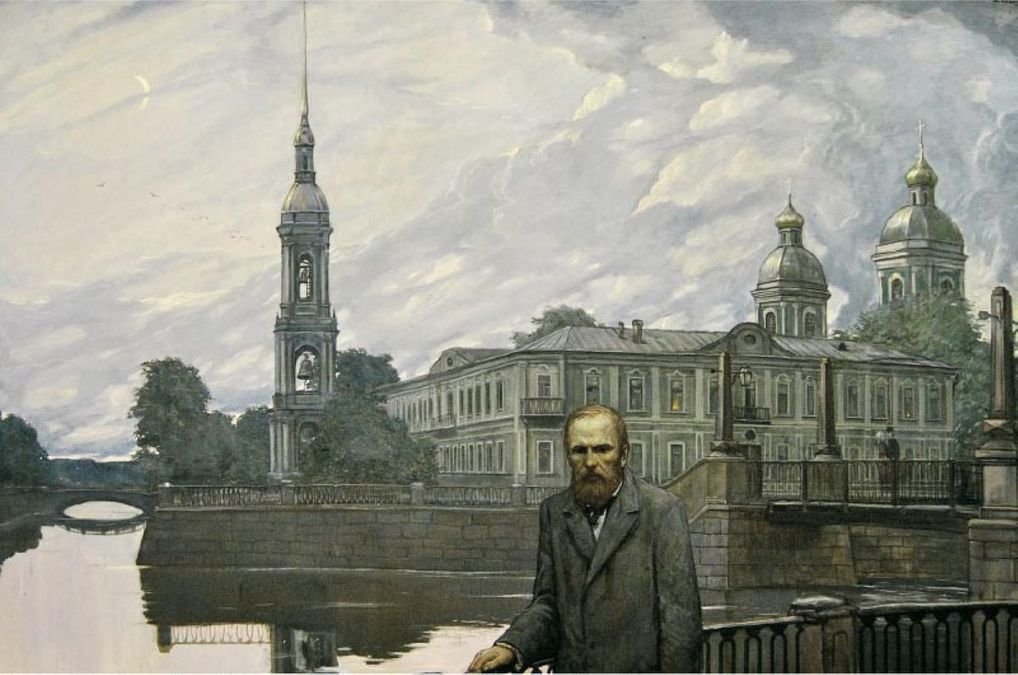
Why a 19th-century Russian still speaks to the anxieties of the modern world
There are writers we admire, and then there are writers who unsettle us. Fyodor Dostoevsky belongs firmly to the second category. He is not a comforting companion. He does not offer easy optimism or neat conclusions. Instead, he drags us into dark rooms of the human soul and locks the door from inside. Yet, generation after generation, readers keep returning to him. In classrooms and coffee houses, on social media feeds and in private conversations, Dostoevsky’s name still appears—perhaps more than many of his more polished contemporaries.
The writer of inner earthquakes
Dostoevsky did not write about ordinary events. He wrote about inner earthquakes. His novels are full of murderers, fanatics, lost believers, desperate lovers, and broken families. But beneath all the drama is a single obsession: the human conscience.
In ‘Crime and Punishment’, we watch Raskolnikov commit a brutal murder, convinced he is justified, even destined, to rise above ordinary morality. On paper, it is a crime story. In reality, it is a story of a mind collapsing under the weight of its own rationalisations. The police can chase him, but the real pursuer is his own conscience.
Dostoevsky understood something that modern life often wants us to forget: no matter how sophisticated our systems, how powerful our ideologies, or how convenient our justifications, the human heart remains uneasy when it crosses its own moral lines. You can hide from the law. You cannot hide from yourself.
For societies living through conflict, this is not a literary detail. It is a central fact. Violence, whether physical or psychological, does not end when the event ends. It lingers in memories, in families, in communities—and inside the people who committed it, supported it, or silently accepted it. Dostoevsky reminds us that the battlefield is also within.
Freedom without responsibility: a dangerous illusion
One of the most disturbing aspects of Dostoevsky’s work is his vision of freedom gone wrong. He saw, ahead of his time, how an idea of freedom detached from responsibility could become destructive. When people begin to believe that “everything is permitted” in the name of some higher cause—be it ideology, nationalism, or even personal ambition—then any act can be justified.
In ‘The Brothers Karamazov’, one character imagines a world where God does not exist, and therefore there is no ultimate accountability, no final justice. From that thought emerges a frightening possibility: if there is no one to answer to, why not do anything you like? Dostoevsky does not give a philosophical lecture here; he shows what happens when such thinking takes hold in families and societies.
The result is not liberation but chaos—suspicion, betrayal, and spiritual exhaustion.
Our own age is full of noisy declarations of freedom: freedom to say anything, to insult, to cancel, to humiliate; freedom to consume without limit; freedom to twist truth into whatever shape suits us. Technology has multiplied our reach and our speed, but not necessarily our sense of responsibility. We can ruin reputations in seconds, destroy trust in institutions in a few clicks, and spread hatred or misinformation without ever meeting those we harm.
Dostoevsky would not be surprised. He knew that when freedom is separated from moral responsibility, it eventually turns back against the very people who celebrate it. Unchecked power—whether in the hands of the state, the mob, or the individual ego—always produces victims, and often, finally, devours itself.
Faith in a skeptical age
Dostoevsky’s own life was one long struggle with faith and doubt. He was nearly executed for his early political activities, spared at the last minute, and sent to Siberian exile. There he met criminals, peasants, believers, and sceptics, and it was in that harsh environment that his spiritual vision deepened.
Unlike preachy writers, Dostoevsky did not offer simple religious slogans. His characters argue fiercely about God, atheism, suffering, and evil. Some lose their faith. Some find it. Some simply wander in between. Yet through all this, one idea emerges: human beings cannot live on material facts alone.
In an age that prides itself on being “practical” and “rational,” this is an uncomfortable message. We like to believe that better infrastructure, more data, and smarter policies will solve everything. These are necessary, but not sufficient. People do not just crave comfort; they crave meaning. They want to know why their suffering matters, what justice truly is, whether forgiveness is possible, and how to live with dignity in a broken world.
In societies marked by conflict, these questions become even more urgent. When injustice accumulates, when trauma is passed down like an heirloom, when young people grow up more familiar with loss than with security, the temptation is either to sink into despair or explode in rage. Dostoevsky’s novels inhabit the relationship between despair and rage precisely. He does not dismiss either. He lets them speak. But he also asks: can there be a path beyond them?
Compassion as a radical act
For a writer of such darkness, Dostoevsky is also, paradoxically, a writer of compassion. His greatest characters are not the strong and successful, but the weak, the humiliated, the ashamed. He pays attention to people society mocks or ignores: poor students, fallen women, drunken fathers, desperate children.
This does not mean he romanticises suffering. On the contrary, he exposes how easily society uses the suffering of the weak as a kind of entertainment or moral lesson, without ever questioning the structures that produce that suffering. But he also insists that real moral life begins when we stop treating others as background scenery and start seeing them as souls—with their own fears, hopes, and hidden goodness.
In one sense, Dostoevsky challenges the modern culture of judgment. Social media has made it easy to condemn from a distance, to reduce complex human beings to a single act, a single post, or a single label. In his novels, no one is so simple. The sinner is rarely only a villain. The saint is never perfectly pure. Everyone is a mixture of good and evil, capable of falling and of rising.
The mirror we try to avoid
Reading Dostoevsky can be uncomfortable because his real subject is not Russia in the 1800s. His real subject is us. When we follow Raskolnikov’s tortured reasoning, we may recognise our own justifications—smaller, perhaps, but similar in structure. When we see families in ‘The Brothers Karamazov’ tear themselves apart over money, pride, and wounded egos, we may think of our own quarrels, our own silent resentments.
Dostoevsky’s gift is to hold up a mirror we often try to avoid. He forces us to confront our contradictions: wanting justice but refusing to examine our own compromises; demanding honesty while living inside convenient lies; yearning for peace while feeding on news, gossip, and rhetoric that keep us permanently agitated.
In a region where narratives are constantly competing—each side sure of its own innocence and the other’s guilt—this mirror is especially necessary. Without it, we risk becoming trapped in a story where we are always victims or always heroes, never participants in a shared, messy human drama.
Lessons for a fragile present
What, then, can Dostoevsky offer to a young reader today, perhaps on a phone screen, scrolling between notifications and news alerts?
First, he offers seriousness. Not heaviness, but depth. In a world of endless distraction, his novels demand attention—not just to the story, but to one’s own reactions. Why do we sympathise with a criminal? Why do we feel uneasy when a character uses high ideals to justify cruelty? Why are we moved when a small act of kindness shines through the gloom? These questions push us to examine our own values, not just consume a plot.
Second, he offers a warning about the seduction of ideologies. Dostoevsky lived in a time of revolutionary ideas, where grand visions promised to solve all social problems through force, upheaval, or total reorganization of society. He had seen where such dreams could lead: to the sacrifice of actual human beings in the name of imagined futures. The 20th century, with its wars and genocides, sadly proved him right. Our own century is not immune.
In any place of conflict, the temptation to embrace absolute narratives is strong. Narratives that divide the world cleanly into good and evil, us and them, innocent and guilty. Such stories provide emotional comfort, even moral energy. But Dostoevsky gently, and sometimes brutally, reminds us that reality is more tangled. No ideology, however noble-sounding, has the right to erase the uniqueness of individual lives.
Third, he offers a stubborn hope—not the cheap, sentimental kind, but a hard-earned hope that passes through darkness. His characters suffer, fail, and sometimes commit unforgivable acts. Yet again and again he insists that a single moment of compassion, a single act of humility, a single decision to admit the truth, can begin to change a life.
This is not a political programme. It will not appear in manifestos or policy papers. But it matters. Because how we treat the person in front of us—our neighbour, our colleague, our opponent, even our anonymous online interlocutor—shapes the atmosphere in which larger events unfold.
Why Dostoevsky still matters
It would be easy to dismiss Dostoevsky as a writer of a distant empire, with old-fashioned settings and long, demanding books. But beneath the surface, his questions are our questions.
We, too, live in an age of fear and uncertainty, in a world where technology connects and isolates us at the same time, where ideologies promise salvation and deliver division, and where the line between truth and falsehood is constantly blurred. We, too, are tempted to believe that power is more important than conscience, that ends justify means, that inner unease can be silenced by noise and distraction.
Dostoevsky does not let us off so easily. He insists that every human being is answerable to others, and finally, to their own soul. He reminds us that the greatest battles are often fought not on the streets but in the privacy of the human heart. And he suggests that any future worth having must be built not only on laws and institutions, but on the difficult, daily work of moral honesty and compassion.
For readers, Dostoevsky offers no ready-made answers. But he offers something perhaps more valuable: a language to think deeply about guilt and forgiveness, about freedom and responsibility, about suffering and dignity. In an era of quick takes and short attention spans, that in itself is a quiet act of resistance.
The Russian novelist who wrote in the shadow of tsars and prison walls could not have imagined our world of Wi-Fi and smartphones, of online outrage and globalised anxieties. Yet his words travel across time and geography because the human heart has not changed as much as we like to believe.
We may change our rulers, our borders, our technologies. But as long as we struggle with conscience, as long as we are torn between selfishness and empathy, as long as we can still be moved by the fate of another human being, Dostoevsky will remain disturbingly, urgently, relevant.
And perhaps that is why, in a small corner of the Himalayas, a reader opening his pages today may still feel a shock of recognition—as if a stranger from a distant century has quietly understood something we ourselves hesitate to admit.
(The Author is an Assistant Professor working in Dubai and writes exclusively on literature)
