


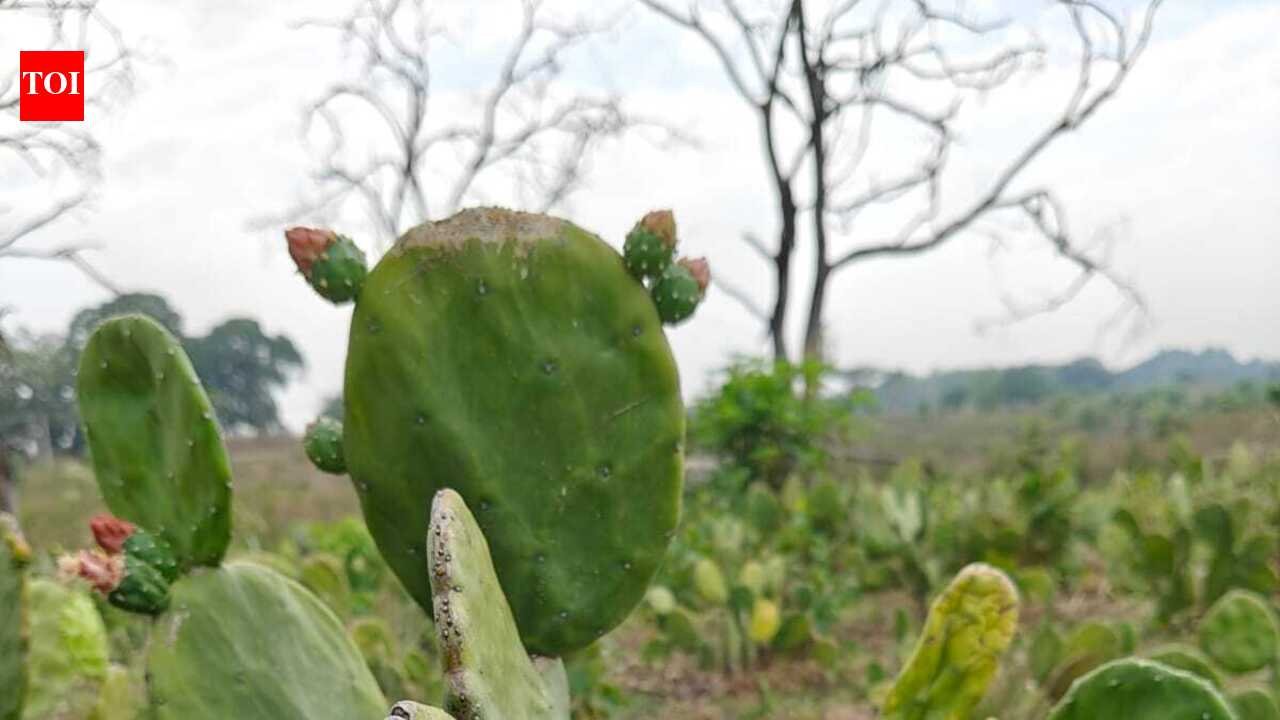
Kelly Kislaya | TNNRanchi: To reclaim degraded terrain and increase rural incomes, the Jharkhand State Watershed Mission (JSWM) is set to introduce the cultivation of spineless cactus across the state’s barren expanses.Operating under the aegis of the rural development department, this first-of-its-kind initiative is being launched under the Watershed Development Components of the Pradhan Mantri Krishi Sinchai Yojana 2.0 (WDC-PMKSY 2.0).The project will initially roll out as a pilot across approximately 500 hectares of land. Mrityunjay Kumar Baranwal, chief executive officer of JSWM said, “It is good for the environment, it is a perennial plant and can also generate a good income for farmers.”The exceptionally resilient crop can be planted in severely degraded lands or uplands completely unsuitable for traditional paddy cultivation. Beyond land rehabilitation, the deep-rooted structure of the perennial cactus acts as a natural barrier against soil erosion and assists in climate change mitigation.About the utility, Baranwal said, ““The spineless cactus has various usage like food, fodder and fertiliser. However, its most unique benefit is that it is used in making vegan leather, which can be a real profit maker for the farmers.”With global fashion brands and consumers rapidly shifting toward cruelty-free alternatives, JSWM anticipates a highly lucrative domestic and international market for the crop. Official estimates indicate that when processed into vegan leather, the produce can command a premium price of up to Rs 1,800 per kg.The large-scale rollout follows a successful one-year demonstration conducted across 11 hectares in the Rania and Murhu blocks of Khunti district. Outlining the expansion strategy, the CEO said, “We are planning to do the farming in cluster mode in Khunti around the area where the successful demonstration has been done so that more farmers can be benefitted. Once successful as a pilot, the project will be taken to other districts.”JSWM has floated a Request for Proposal (RFP), inviting eligible agricultural and biotechnology agencies to submit bids for the production and supply of high-yielding, tissue-cultured spineless cactus plants. The deadline for submissions is fixed for July 21, 2026.To shield smallholders from market volatility, the govt intends to embed strict financial safeguards into the project’s framework. Baranwal said, “Right now we are looking at a buy back model. The agency that would supply the plants will also buy back the final produce. This will give our farmers confidence that they will have a confirmed income so they will be more willing to do it.”EoM
Attachment
Attachment
Attachment
Attachment
Attachment
Attachment
