


By foregrounding South Asian exegetical traditions, Bashir not only enriches our understanding of Qur’anic thought but also compels us to rethink the tafsir’s global history
BOOK REVIEW
MUHAMMAD YASEEN GADA
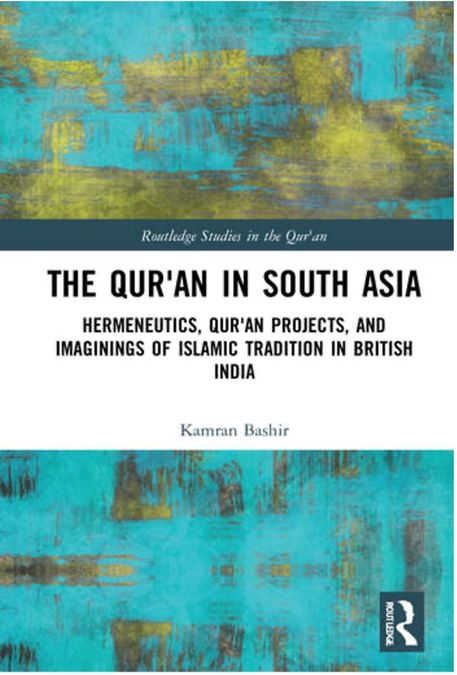
The book investigates the common scholarly binary of “traditionalist” and “modernist” tafsir, arguing instead for continuities between pre-modern and modern Qur’anic thought. Kamran Bashir situates South Asian exegesis in local, colonial, and global contexts, challenging portrayals of modern interpretations as ruptures from the Islamic intellectual heritage. His attempt to explain “why Muslims interpreted the Qur’an as they did” (p. 5) is perhaps one of the profound questions modern scholars of the Qur’an have long struggled with and continue to do so.
For instance, Johanna Pink, a professor of Islamic Studies at the Albert-Ludwigs-University of Freiburg, Germany, also dealt with this issue in her recent book, Muslim Qur’anic Interpretations Today: Media, Genealogies and Interpretive Communities (2019), when she wrote, “[b]efore asking how Muslims today are interpreting the Qurʾān, we should ask why they do it” (p.15). Several other scholarly works also deal with modern interpretations of the Qur’an through other approaches and methodologies, but these studies offer significant revelations about Muslim interpretative tendencies of the Qur’an in the Modern context, which are commendable.
The book under review is organized into eight thematic chapters, framed by a substantial introduction. Bashir’s central aim is to question the assumption that modern tafsīr in South Asia emerged as a radical break from pre-modern exegetical traditions. He identifies five problematic assumptions in much scholarship on modern Qur’anic interpretation: (1) that modern tafsīr is purely a modern product disconnected from the past, (2) that it overemphasizes literalism, (3) that it excessively foregrounds the Qur’an’s literary qualities, (4) that it relies on reason in unprecedented ways, and (5) that tafsīr can be neatly categorized into rigid typologies (pp. 7–8). To counter these assumptions, Bashir situates South Asian exegetical practices within the intellectual, political, and religious milieu of British India. He argues that continuities between pre-modern and modern tafsīr traditions are more pronounced than usually recognized.
In order to explore continuities in the Quranic interpretations, Bashir delineates 1857 as a pivotal moment in the intellectual understanding of Muslim scholarship of the Qur’an, marking a shift from pre- to post-Mutiny exegetical traditions. Before 1857, he notes, South Asian tafsīr was mostly written in Arabic, drawing heavily on classical commentaries such as of al-Bayḍawi (d. 1319) and al-Jalalayn (d. 1505). Moreover, key principles such as naẓm (textual coherence) and rabṭ-i ayat (interconnectedness of verses) are emphasized, while mystical interpretations and Ḥanafī legal frameworks shape much exegetical writing even before modern times. Bashir underscores that many interpretive techniques later considered “modern” were already visible in these pre-modern works (pp. 23–24).
He also highlights the intellectual legacy of Shah Wali Allah (1703–1762), whose reflections on Qur’anic sciences influenced debates on naskh (abrogation), asbab al-nuzul (occasions of revelation), and mutashabihat into the modern era. Post-1857 tafsīr, Bashir shows, was deeply shaped simultaneously by colonial encounters, missionary polemics, Orientalist critiques, intra-Muslim theological disputes, and Hindu reformist challenges (pp. 43–67). Bashir situates South Asian tafsīr within the broader global currents of Islamic revivalism, reformist thought, pan-Islamism, and anti-colonial resistance, demonstrating how these movements influenced Qur’anic hermeneutics in the region.
Despite these evolving contextual pressures, he contends that Muslim scholarly responses—manifested in commentaries and translations—retained strong continuities with pre-colonial exegetical methodologies. Notably, the advent of print technology played a pivotal role in facilitating the mass production and dissemination of tafsir works, particularly in Urdu, thereby democratizing access to Qur’anic interpretation and reshaping religious discourse in colonial India. Against this backdrop, Bashir examines what he called as “Quran Projects” of three key figures: Sayyid Ahmad Khan (d. 1898), Ashraf ‘Ali Thanawi (d. 1943), and Hamid al-Din Farahi (d. 1930).
Sayyid Ahmad Khan is presented as both rooted in tradition and innovatively responding to modern intellectual challenges. His commentary sought to reconcile revelation with science and reason, reinterpreting terms like malak (angel) as “abilities,” and reading Adam’s creation metaphorically. Bashir stresses Khan’s continuity with classical tafsīr but acknowledges his bold “wholesale revisiting” of the exegetical heritage (p. 94), which many considered radical deviation from mainstream interpretative Quranic thought. Ashraf ‘Ali Thanawi’s Bayān al-Qur’ān is described as a firmly traditionalist work that upheld principles like naẓm, rabṭ, asbāb al-nuzūl, and naskh.
Unlike Khan, Thanawi rejected non-traditionalist paths, though he still adapted his tafsīr to address modern concerns. Bashir portrays him as bridging past and present without compromising orthodoxy. Hamīd al-Dīn Farahi advanced a distinctive hermeneutic centered on naẓm, intertextuality, and rigorous philology. His reinterpretation of Sūrah al-Tīn, in which al-tīn and al-zaytūn symbolized sacred geographies rather than fruits, illustrates his philological method (pp. 184–185). Bashir frames Farahi’s marginalization of ḥadīth as less radical than it may appear, although this claim is debatable. Farahi’s influence on Amin Ahsan Islahi (1904-1997) and Javed Ahmad Ghamidi (b. 1952) underscores his enduring impact.
Through these case studies, Bashir demonstrates that South Asian tafsīr was not a rupture but a dynamic interplay of tradition, adaptation, and contextual responses. The juxtaposition of Khan, Thanawi, and Farahi is particularly effective. By pairing Khan’s rationalist hermeneutics with Thanawi’s traditionalism and Farahi’s philological rigour, Bashir highlights the interpretive diversity of South Asian Qur’anic projects.
That said, certain claims invite critique. Bashir’s effort to situate Sayyid Ahmad Khan within classical heritage is not entirely convincing. Khan’s radical reinterpretations of many Quranic verses and words, such as angels, Adam (AS), and miracles, strain continuity. Bashir’s assertion that Khan was “deeply rooted in his tradition” (p. 95) underplays rupture. Likewise, Bashir arguably minimizes Farahi’s radical interpretative approach. His reliance on philology and scepticism toward ḥadith mark a notable departure from mainstream tafsir tradition. To claim this was “far from being radical” (p. 190) overlooks the disagreement around Farahi’s hermeneutics, later reflected in debates over Islahi and Ghamidi.
In a broader perspective, the interpretive methodologies of Sir Syed Ahmed Khan and the Farahi school, indeed, represent a critical departure from classical tafsīr, rooted in principles that are fundamentally at odds with the traditional exegetical legacy. Khan’s framework was built upon a radical triad: believing the law of fiṭrah as a universal and unchangeable truth, boldly rejecting the understanding of the Qur’an inherited by the Muslims, and declaring hadiths that conflicted with this rationalist reading as unreliable.
While the Farahi school adopted a more nuanced tone, it was noticeably influenced by this foundational approach. The shared tendency to explain miracles through natural causes—despite formal differences—and the similarities in handling specific Quranic verses like Surah al-Tin (chapter 104) and the Ḥuruf Muqaṭṭa‘at (disjointed letters appearing at the beginning of certain Quranic chapters) reveal, in many instances, a common interpretative methodology between Farahi and Khan. In essence, both schools position a rationalist, fiṭrah-based framework as the ultimate arbiter of scripture, thereby re-formulating, rather than continuing, the traditional hermeneutic tradition. Their work, therefore, must be classified as a distinctly modern enterprise in Quranic interpretation.
Moreover, Bashir’s analysis enters a well-established scholarly debate concerning modernity’s impact on tafsīr. He aligns his work against the “rupture” thesis, which he notes is prevalent in studies of modern Islam. He further supports this by citing Johanna Pink’s earlier scholarship, which described the late 19th century as a “rupture” and a “radical departure from the tradition of Qur’anic exegesis” (pp. 215-216). However, this engagement with Pink’s work falls short.
In her more recent study (2019), Johanna Pink notably refines this position, asserting that while “significant transformations and innovations occurred”, but “no clear dividing line between ‘premodern’ and ‘modern’ exegesis” can be drawn and thus “there was never a complete rupture” (p. 38) between the periods. The omission of Pink’s latest work, though published before Bashir’s book; ignoring the Qur’anic “projects” of other schools of thought in South Asia leaves a notable gap in the book’s engagement with contemporary historiography on modern Quranic interpretation.
That said, Bashir’s analysis is informed by his methodological and intellectual training and alignment with a well-known European revisionist tradition of Qur’anic studies, which explicitly explains Bashir’s drive to deconstruct binaries like “traditionalist”/“modernist” and to emphasise hermeneutical continuities. Consequently, this suggests his effort to normalise figures like Khan and Farahi—by downplaying their radical breaks. However, this same lens can lead to a relative marginalisation of the internal theological perspectives that often defined these exegetes as radical within their own tradition.
Despite these critiques, The Qur’an in South Asia is a richly researched and thought-provoking contribution to Qur’anic studies and South Asian intellectual history. This volume will be of particular interest to scholars of Qur’anic hermeneutics, Islamic intellectual history, and colonial South Asia. By foregrounding South Asian exegetical traditions, Bashir not only enriches our understanding of Qur’anic thought but also compels us to rethink the tafsir’s global history.
(The Author is an Assistant Professor of Islamic Studies at the Higher Education Department, Jammu and Kashmir; he can be reached at: [email protected])
