


Matěj Macák, a materials engineer in the Czech Republic, recently came to the conclusion that he has a money problem. He’s afraid to spend it.

The 24-year-old stopped buying sneakers, which he used to like collecting, and fretted over small purchases like a phone charger. Macák has been saving aggressively—usually more than half his income—but worries he has taken it too far.
“I’ve been looking at some Jordans, but then I thought that maybe it’s too much, maybe I should save it instead,” he said. “I realized that I buy less stuff than when I had less money.”
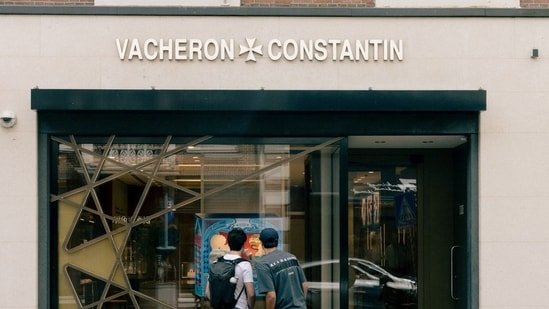
Europeans have doubled down on frugality in recent years—another economic headache for the continent. Consumers’ reluctance to spend is a key reason why Europe has lagged behind the U.S., where robust spending especially among higher-earners has driven growth. European companies that make some of the most coveted products in the world—luxury handbags, watches, clothes—now depend heavily on American and Asian consumers for growth.

While Americans often have no problem maxing out credit cards, frugality is deeply ingrained, particularly in northern parts of the continent. Longstanding societal norms of thrift and modesty, and lingering memories of wartime scarcity and inflation, have helped make saving an obsession and moral imperative. In both Dutch and German, the word for debt also means guilt.
People around the world are feeling the sticker-shock of higher prices, but recent inflation has taken a larger psychological toll on Europeans. More than three years after inflation peaked, consumers are still saving more and spending mostly on essentials, according to transaction data analyzed by Visa. The resurgence in inflation sparked by the war in Iran now threatens to deepen the consumer malaise.

Household consumption has risen 5.5% in the eurozone and 2% in the U.K. since 2019, compared with 18% in the U.S., according to inflation-adjusted data from the Organization for Economic Cooperation and Development.
“It explains quite a large chunk of the growth difference between the U.S. and Europe over the last couple of years,” said Marieke Blom, chief economist at the Dutch bank ING.
It isn’t that Europeans, on average, don’t have money. Real disposable incomes, which adjust for inflation, are now 8% higher in the eurozone than before the pandemic. If households were to return to their prepandemic saving levels, eurozone gross domestic product would be 1.3% larger, according to Blom.
“Europe would really do itself a favor if it would boost domestic demand. That’s a huge brake on an economy,” said Blom.
Measures like tax cuts could help bolster spending, but many governments are constrained by high debt levels, defense investments and aging populations.

Eurozone households saved around 15% of their disposable income last year, compared with around 12.5% before the pandemic. In the U.K., the savings ratio is almost twice as high as before the pandemic. Americans’ savings rate, meanwhile, has dropped well below prepandemic levels.
In an affluent part of southwest London, Shelly Perera used to spend freely on trips to the theater, date nights at an upscale Chinese restaurant and overseas vacations to places like Kenya with her husband and two kids.
Perera and her husband have seen their salaries rise in recent years. But she can’t bring herself to pay for things like Lindt chocolate or dinners out since the 2022 inflation surge. She has downgraded to a budget grocery store, has switched to generic brands and is saving far more.
“We had quite a nice lifestyle, and now we’ve cut back so much,” she said. “We can afford to pay, but we just refuse to do it now.”
Some Europeans, especially younger ones, say they are worried government pensions won’t be able to support them in the future as aging populations strain welfare systems.
“About a year and a half ago I realized that as a European it’s not enough to just rely on the pension provided by the state,” said Vincent Boucard, a 32-year-old strategy consultant in Paris. “That is totally going to be different in the future for our generation than it was for our elders.”
Boucard started budgeting a few years ago, using an Excel sheet to track all of his expenses. He moved to a cheaper apartment and aims to save about 50% of his paychecks. He has started investing in stocks and exchange-traded funds.
Many Europeans remain skeptical of investing. Europeans keep about a third of their financial assets in cash or bank accounts, earning low interest rates that can lag behind inflation. They would be better off investing more in financial markets like Americans do, economists say. Channeling part of the trillions of euros sitting in households’ bank accounts into more-productive investments would also help the economy, economists argue.


Monika Müller, a financial psychologist and coach based outside of Frankfurt, hosts seminars for traders and financial advisers to help them get more comfortable with taking risks.
“For us, the stock market has not been part of our life. Our brain says ‘that might be dangerous,’” she said.
Müller has people write down family histories with money. She once used hand puppets to help a client confront his anxieties about investing a family inheritance. (He ultimately did.) The root problem, Müller said, is that Germans equate money to safety, and the thought of parting with it leaves people paralyzed.

“In Germany we project security, safety onto money, and in America you project freedom,” she said. “To avoid insecurity means you will never grow.”
For many Europeans, the need to save is a lesson passed down from parents and grandparents who lived through the economic devastation of 20th-century warfare on the continent.
In the Netherlands, software developer Pieter Brakenhoff grew up watching his father, who was born during World War II, replace clothes only when they fell apart. His family’s biggest extravagance was a trip to Applebee’s, the American chain restaurant that once had outposts in the Netherlands.
When he was a teenager, Brakenhoff bought himself a pair of Nike shoes with money he earned from his paper route.
“They were so great, but I got in such a big fight with my dad that I had spent so much money on a pair of shoes,” he said. “He couldn’t imagine it.”
Brakenhoff spent much of his life afraid of spending money, but he has been trying to take a more relaxed approach in recent years. He’s going to more restaurants and taking vacations.
“I had to learn how to spend money,” he said.
Write to Chelsey Dulaney at chelsey.dulaney@wsj.com
