


By Manisha Malhotra
As artificial intelligence reshapes the nature of work, schools face the most consequential pedagogical question of our time – how do we prepare children not just to use technology, but to think critically, lead with empathy, and thrive in a world that is still being invented?
During a project-based learning class, I stood at the doorway of a classroom and watched something that stayed with me. Four students, ten and eleven years old, were gathered around a large sheet of craft paper, debating with the kind of focus children bring when something truly interests them. They were designing a community garden for a neglected corner of a neighbourhood, discussing which vegetables to plant, who would tend them, and whether elderly residents nearby might want to be involved. One student was sketching, while another drafted questions for the district councillor, a third carefully annotated a hand-drawn map. There were no screens in sight — and none were needed.
In those fifteen minutes, I witnessed creativity, empathy, collaboration, problem-solving, and real-world reasoning unfold naturally, without instruction. Yet even in that calm and purposeful moment, I found myself returning to a thought that increasingly shapes conversations around education: the world waiting for these children outside the school gates looks very different. It moves faster, changes constantly, and rewards a new set of capabilities. It is being reshaped by artificial intelligence, automation, and a technology-driven ecosystem evolving far more rapidly than traditional curricula can keep pace with.According to the World Economic Forum’s Future of Jobs Report, nearly 40% of core workplace skills are expected to change within this decade. For children starting school today, these shifts will be even more profound, shaping not just jobs they do, but lives they lead.
That number asks for reflection. If two in five foundational skills are evolving, what does that mean for what we teach—and how we teach it? The definition of being “future-ready” is no longer fixed. Academic excellence alone is no longer enough, children must also develop adaptability, creativity, emotional intelligence, and the confidence to navigate uncertainty.
We must prepare children for a technology-driven future without losing sight of what technology can never replace. Building digital fluency must go hand in hand with nurturing depth of thought—teaching children to work with algorithms without losing their individuality.
The schools that prepare children most effectively are those that can hold both realities together, equipping students for a digital world while keeping learning grounded in curiosity, compassion, and the freedom to imagine. Finding this balance, and translating it into everyday classroom practice, is what we as educators must actively explore.
These five approaches reflect practices we are actively shaping—rooted in how children learn and in what a rapidly changing world will demand of them. Together, they reject the idea that human growth and technical preparation are separate agendas and instead treat them as deeply interconnected.
Community-based problem solving
When students are asked to identify genuine challenges in the communities around them – whether it is waste management, loneliness among elderly or the struggles of a local business – something shifts in the quality of their engagement. Learning is no longer theoretical. The problems are real, the constraints are real, and the feedback comes from people whose lives are directly affected. Students begin to understand that knowledge matters most when it is applied with purpose and responsibility.
One such example is a student from Satya School who developed an AI-enabled feature called Cycle Care, designed to address menstrual health concerns anonymously. The platform focuses on awareness around hygiene, myths and facts, education, and emotional wellbeing, creating a safe and accessible space for young individuals to seek support and information. It is also chatbot enabled – named SakhiBot. Initiatives like these demonstrate how technology, when combined with social awareness, can help address meaningful educational and societal concerns.
Story circles and narrative intelligence
In a world saturated with opinions and content, the ability to listen carefully — to understand another person’s experience without rushing to respond — is becoming increasingly rare. The concept of story circles will bring students across ages and backgrounds together in structured conversations centred on listening, reflection, and understanding different perspectives. These sessions help children build empathy, emotional intelligence, and the ability to navigate different perspectives thoughtfully. As automation reshapes workplaces, skills rooted in human interaction — the ability to grasp nuance, communicate clearly, and work together — will become even more valuable.
Technology sabbaticals and analogue innovation
Some of the most meaningful learning happens when digital tools are intentionally removed — not as a rejection of technology, but as a way to rediscover independent thinking and creativity. When a group of twelve-year-olds is asked to map a route using only observation and conversation, or to solve a logistical problem using only paper, a pencil, and sustained reasoning, they become inventors again. Limitation stops being an obstacle and becomes a catalyst for creativity. Whether through analogue tasks or zero-budget design challenges, constraint often leads to more original thinking and stronger problem-solving habits.
Ethical AI and futures literacy
Children today must learn not only how to use AI, but also how to question, analyse, and ethically engage with it. In Ethical AI Labs, students move beyond passive consumption to actively interrogating how AI systems work. They explore how training data shapes outcomes, where bias enters algorithms, and what fairness means in a technological context. A child who has critically examined an AI model develops a far more balanced relationship with technology — neither fearful nor unquestioningly dependent.
Alongside this, Futures Literacy Workshops encourage students to think systematically about change. They study how industries have evolved, analyse emerging skills, and imagine future scenarios not as predictions, but as exercises in adaptability and strategic thinking. At Satya School’s space labs, this becomes tangible as students simulate missions, explore satellite design, and engage with the physics of exploration. They are not simply imagining the future; they are learning how to think ahead, ask better questions, and engage with uncertainty constructively.
Transdisciplinary real-world challenges
Some of the richest learning experiences emerge when students work on unscripted, real-life challenges brought in by local businesses, NGOs, or social enterprises. Solving these problems requires blending data literacy with empathy, technical analysis with creative reframing, and individual insight with collective effort. Alongside this, future-oriented thinking—examining how industries evolve and imagining plausible scenarios—helps students practice thinking forward without pretending to predict the future. These experiences closely mirror the complexity of real workplaces and help children understand what meaningful contribution truly looks like.
It would be a mistake to divide these approaches into “human” learning and “technical” learning. Their real power lies in the way they intersect. A student who listens deeply in a story circle, identifies a community problem, and then applies technology thoughtfully to address it is engaging in a form of learning no single method can produce on its own.
In the end, the true measure of future-ready education will not be how quickly children adapt to technology, but how confidently they can navigate complexity, contribute meaningfully, and remain deeply human in a world of constant change.
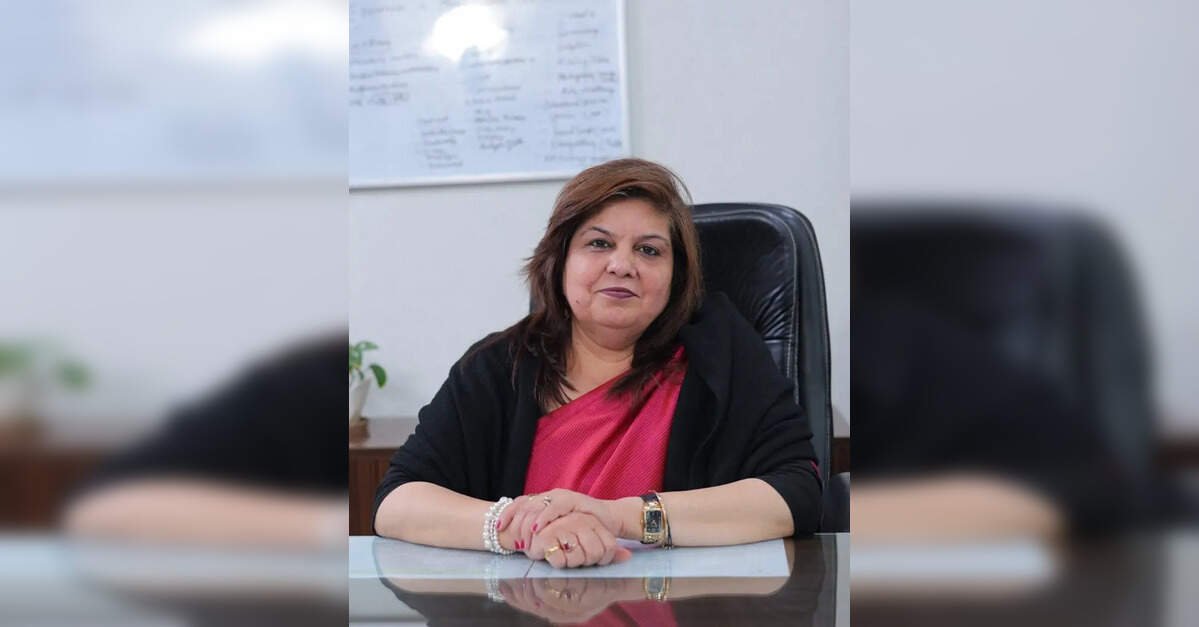
Manisha Malhotra is the Director-Principal, Satya School Gurugram.
DISCLAIMER: The views expressed are solely of the author and ETEDUCATION does not necessarily subscribe to it. ETEDUCATION will not be responsible for any damage caused to any person or organisation directly or indirectly.
