


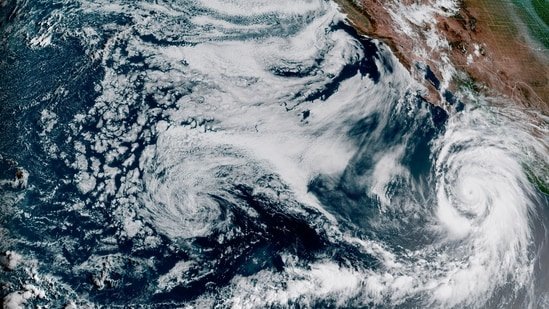
El Nino conditions are currently active over the equatorial Pacific Ocean and are expected to strengthen during this southwest monsoon season, according to the latest climate bulletin from the Earth System Science Organisation (ESSO) and the India Meteorological Department (IMD).

The agencies confirm that both the ocean and atmosphere now show clear El Nino signals. Sea surface temperatures are above normal, and warmer water is also present below the ocean surface.
ALSO READ | India braces for harsher summer, weaker monsoon as El Niño grips equatorial Pacific
What is El Nino?
It is a climate pattern that develops in the equatorial Pacific Ocean when sea surface temperatures become warmer than normal. This warming changes wind patterns and air pressure, which then affects weather across the world.
It happens when the usual trade winds weaken, allowing warm water that is normally pushed toward the western Pacific to spread toward the central and eastern Pacific.
As a result, weather patterns shift globally, often causing heavy rain and floods in some regions, drought in others, and sometimes higher overall global temperatures. El Nino is part of a larger system called ENSO, which also includes La Nina, the cooler phase of the cycle.
Ocean conditions
In May, the central and eastern equatorial Pacific recorded above-normal sea surface temperatures. Similar warming also appeared in the western Pacific, the Maritime Continent, and parts of both hemispheres of the ocean.
The Indian Ocean also remained warmer than normal across both basins, including the Arabian Sea and the Bay of Bengal. Compared to April, warming expanded across large parts of both the Pacific and Indian Oceans, showing a clear intensification.
ENSO status
The ENSO cycle has shifted sharply over the past year. Conditions were neutral in mid-2025, shifted to La Nina from August 2025 to February, and returned to neutral in March.
This month, the Pacific Ocean became warm enough to cross the El Nino level, and warm water has also been present below the ocean surface, especially in the eastern Pacific, as per the IMD bulletin.
Forecasts from the Monsoon Mission Coupled Forecast System (MMCFS) suggest further strengthening between June and September, with the event likely continuing through the monsoon season.
ALSO READ | The most powerful El Nino in a century could be on its way to reshape global weather patterns
Indian Ocean Dipole
The Indian Ocean Dipole remains neutral after turning stable in January 2026 following a brief negative phase in late 2025. Current model projections indicate it will stay in this neutral state during the monsoon period. (The Indian Ocean Dipole is a climate pattern in the Indian Ocean where sea surface temperatures shift between the western and eastern parts of the ocean.)
Although some subsurface warming is present in the central equatorial Indian Ocean, it is not strong enough to shift the phase.
Outlook
Model projections indicate persistent warming in the central Pacific through June-August, with expansion expected in the following months. El Nino conditions may intensify to moderate or strong levels during the southwest monsoon, while the Indian Ocean is expected to remain stable.
