


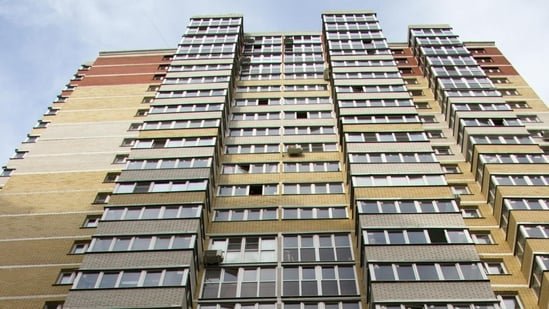
A Chinese homebuyer who believed he had purchased an apartment on the 34th floor of a newly built residential tower was stunned to learn, years later, that the building had only 32 storeys. More than a decade after the purchase, he reportedly has not received possession of the apartment and is still pursuing a refund.
The case offers Indian homebuyers an important lesson: due diligence must go far beyond reviewing the apartment layout, the brochure, or the payment schedule. Legal experts say buyers, particularly those purchasing homes on higher floors, should verify sanctioned building plans, completion and occupancy certificates.

While premium floors often command higher prices for their views and exclusivity, buyers must ensure that the unit they are purchasing is supported by all necessary approvals and legal clearances. A premium view may come at a high price, but it should also be accompanied by legal certainty, they say.
According to a report in the South China Morning Post, the buyer, identified only by his surname Shen, purchased a 90-square-metre apartment in 2013 in a village near Xi’an, Shaanxi province. He paid 2,646 yuan (roughly around ₹31000) per square metre, roughly one-third of the prevailing market rate, because the project was marketed as having ‘limited property rights’, a form of housing built on collectively owned rural land rather than state-owned urban land.
The developer had promised to hand over the apartment by 2015. However, when construction was delayed, and Shen sought possession years later, he was informed that the building contained only 32 floors and that the apartment he had purchased on the purported 34th floor did not exist.
The developer initially offered Shen an alternative unit on the 32nd floor, but the deal fell through. When he sought a refund, the company cited financial difficulties. Over the years, Shen received only partial repayments, with the developer eventually ceasing communication, the report said.
After pursuing arbitration, local authorities reportedly ordered the developer to refund the outstanding amount along with interest and additional compensation for non-payment. Despite the ruling, Shen reportedly had not received the remaining money as of May 2026. Subsequent court action also failed to recover the funds because the developer allegedly had no assets registered in its name, as per the report.
More than 10 years after signing the purchase agreement, Shen remains without either the apartment he paid for or full compensation for his losses, the report said.
Lessons that Indian homebuyers can draw from the case
In India’s competitive housing market, apartments on higher floors often command a premium because of better views, privacy and reduced noise. However, experts caution that buyers should pay as much attention to regulatory approvals as they do to floor height and amenities.
Legal experts say there have been instances of developers constructing additional floors or deviating from sanctioned plans. In some projects, occupancy certificates were delayed or denied due to such violations, leaving homebuyers caught in lengthy legal battles and facing difficulties obtaining possession, municipal services, or even selling the property in the future.
“The incident serves as a reminder that homebuyers should not assume that every floor constructed by a developer necessarily forms part of the approved building plans. While premium apartments on higher floors are often preferred for better views and privacy, the legal and regulatory aspects become equally important and, in some cases, more critical,” explains Sonam Chandwani, Managing Partner, KS Legal & Associates.
Before purchasing an apartment on an upper floor of a building, buyers should verify whether the total number of floors has been duly sanctioned by the competent authority.
Reliance should not be placed solely on brochures, advertisements or assurances given by the developer. The sanctioned layout plans, commencement certificate, completion certificate and occupancy certificate should be carefully examined to ensure that the particular unit being purchased forms part of the approved structure, she told Hindustan Times Real Estate.
Fire safety approvals and compliance with building regulations are also important considerations, particularly in high-rise developments where evacuation and safety requirements are subject to stricter standards, she said.
Certain projects have also faced demolition proceedings or regulatory action due to unauthorised construction. These disputes have repeatedly demonstrated that, even where a purchaser has acted in good faith, the consequences of the developer’s non-compliance are often borne by the homebuyer, she said.
Legal due diligence extends beyond verifying ownership and title
Regulatory compliance is equally significant. A clear title to the land does not automatically mean that every portion of the building has been lawfully constructed.
Buyers should therefore ascertain whether the project is registered with the applicable authorities, review the approved plans and statutory permissions, verify the occupancy certificate and confirm that no notices or proceedings relating to unauthorised construction are pending. An independent legal review of these aspects before purchase can often prevent disputes that may otherwise surface years after possession, she said.
Ultimately, a buyer is not merely purchasing an apartment but acquiring rights in a structure that must have been built in accordance with the law. The physical existence of a floor does not necessarily guarantee its legal existence, and that distinction can have serious implications for ownership, financing and future marketability of the property, she added.
