


I’ve been hopping onto a flight almost every month for the past two years. One learning I’ve had is that airport security can be surprisingly unpredictable.
I have carried packets of Meghana biryani from Bengaluru to Bhopal, cartons of mangosteens, freshly milled jowar atta, bananas, mangoes, multiple water bottles and even a coffee mug filled with homemade iced coffee. Most of it made it through without a problem. The jowar atta did trigger a security check because, apparently, it shows up on scanners much like red chilli powder. The one thing that did not make it? An expensive hair mask that Hong Kong airport security promptly confiscated because it was sitting in my cabin bag instead of checked baggage.
After enough airport adventures, a few lessons become very clear. The rules are not complicated, but knowing them can save you money, time and a very emotional goodbye to something you just bought. Recent enforcement by Indian aviation authorities has also become stricter, making it more important than ever to know exactly what belongs in your cabin bag and what does not.
The one bag rule is very real
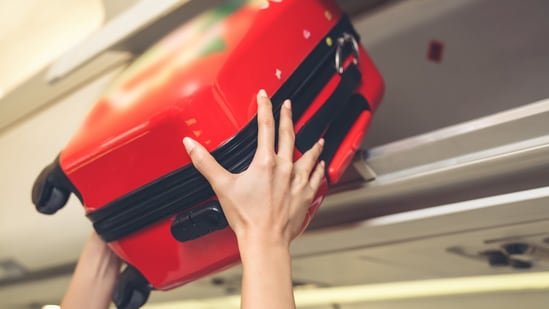
Most Indian airlines, including IndiGo, Air India, Akasa Air and SpiceJet, follow a fairly standard hand baggage policy. For economy travellers, you are generally allowed:
The cabin bag allowance is usually capped at 7 kg. Air India permits up to 8 kg on some flights. Premium cabins often receive a higher allowance ranging from 10 kg to 12 kg, depending on the airline and route.
The dimensions matter just as much as the weight. Your cabin suitcase should not exceed 55 cm x 35 cm x 25 cm, including wheels, handles and any protruding parts.
This is where many travellers get caught out. Plenty of luggage brands market bulky suitcases as cabin-friendly. Most domestic airline staff do not pay much attention. Then one day, you meet that one person at the check-in counter who decides to pull out the measuring frame.
Trust me, that is not the argument you want to have five minutes before boarding.
Another frequent flyer tip. If your checked suitcase is even slightly overweight, there is a good chance the airline staff will suddenly become very interested in weighing your cabin baggage too. Stay within the limits and save yourself the stress.
What exactly counts as a personal item?
Your personal item is the second bag you are allowed to carry. It should fit comfortably under the seat in front of you and usually should not exceed around 3 kg.
Commonly accepted personal items include:
- A laptop sleeve or slim laptop bag
- A ladies’ handbag
- A small messenger bag
- A compact infant or diaper bag
- One sealed duty-free shopping bag purchased after security screening
There are also a few items that typically do not count towards your baggage allowance. These include a winter jacket or overcoat, walking sticks or crutches if required, and a single book.
The key is to keep your personal item genuinely personal-sized. If it looks like a second suitcase, expect questions.
The liquid rule that catches everyone
If there is one rule that travellers forget repeatedly, it is the liquids rule. Every liquid, gel, cream or aerosol container in your cabin baggage must be 100 ml or less.
The important detail here is the container size, not the amount inside it.
A 200 ml bottle with only 20 ml of product remaining is still considered a 200 ml container and can be confiscated.
I learnt this lesson the hard way when I had to say goodbye to a rather expensive hair mask at Hong Kong airport. It would have travelled perfectly safely in checked baggage. Cabin baggage was a completely different story.
All your liquid containers must fit inside a transparent, resealable one-litre plastic pouch. At security screening, remove this pouch from your bag and place it separately in the tray.
It makes the process much quicker and avoids unnecessary bag inspections.
What must go in your cabin bag, and what cannot
Some items should always travel with you in the cabin.
These include:
- Power banks below 100Wh
- Spare lithium batteries
- Camera batteries
- Drone batteries
- Passports
- Cash
- Jewellery
- Expensive electronics
Power banks and loose lithium batteries are generally not permitted in checked baggage, so keep them with you. On the other hand, some items simply will not make it through security.
These include:
- Knives
- Scissors
- Metal nail files
- Multi-tools with blades
- Wrenches
- Pliers
- Toy weapon replicas
- Electronic cigarettes
- Vapes
Speaking of food, I have successfully flown with biryani, fruit and plenty of snacks. Spices and masalas are a different story. Even sealed packets often attract additional scrutiny and can be removed during screening. If you are carrying large quantities, checked baggage is usually the safer option.
The same goes for alcohol. Pack it in checked baggage unless it is sealed duty-free alcohol purchased at an international airport.
A useful update for international travellers
If you are returning to India from an international trip, there is some good news.
- The general duty-free allowance for Indian residents returning after trips longer than three days has been increased to ₹75,000 from the earlier ₹50,000.
- A single laptop or tablet also remains duty-free regardless of its value, making life a little easier for frequent travellers and shoppers.
How to pack smart and fly easy
Airport security does not have to be stressful. Most problems happen because travellers assume rather than check.
- Measure your suitcase before buying it. Consolidate liquids into travel-sized containers. Separate your liquids pouch before screening. Keep power banks in your cabin bag. Pack alcohol and larger toiletries in checked baggage.
- And if you are trying to save a little baggage weight, wear your heaviest jacket on the plane instead of packing it.
A few minutes of preparation can turn airport security from a chaotic bottleneck into the quickest part of your travel day.
Similar articles for you
Disclaimer: At Hindustan Times, we help you stay up-to-date with the latest trends and products. Hindustan Times has an affiliate partnership, so we may get a part of the revenue when you make a purchase. We shall not be liable for any claim under applicable laws, including but not limited to the Consumer Protection Act, 2019, with respect to the products. The products listed in this article are in no particular order of priority.
