


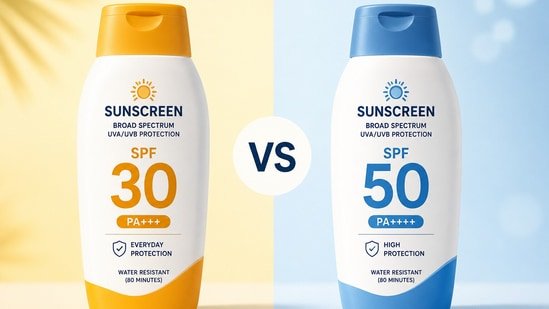
When shopping for sunscreen, choosing the right Sun Protection Factor (SPF) is one of the most crucial things to notice. And two of the most common options, we mostly see on the bottles are SPF 30 and SPF 50. And whether we blame it on social media influence or our cerebral intelligence, we are certain that the higher the SPF, the better the sun protection. And while this is practically true in most ways, understanding the difference can help you decide the right sunscreen for your skin and lifestyle.


What does SPF mean?
As most of us know, SPF stands for Sun Protection Factor. It measures how well a sunscreen protects your skin from the UVB and UVA rays, which are the main cause of sunburn, skin cancer and premature skin ageing. So, the higher the SPF number, the more UVB and UVA protection the sunscreen provides. However, the difference is not as large as many people think.
SPF 30 blocks about 97% of UVB rays. SPF 50 blocks about 98% of UVB rays. While SPF 50 provides more protection, it only blocks about 1% more UVB rays than SPF 30.
Benefits of SPF 30
SPF 30 is one of the most recommended sunscreen levels by dermatologists. It provides strong protection for everyday activities and is suitable for most people.
1. Excellent daily protection: SPF 30 blocks about 97% of harmful UVB rays, making it effective for daily use. Whether you are walking, driving, or spending short periods outdoors, SPF 30 can help protect your skin.
2. Lightweight feel: Many SPF 30 products feel lighter on the skin compared to higher-SPF formulas. This makes them comfortable for everyday wear, especially under makeup.
3. Widely available: SPF 30 sunscreens are easy to find in stores and online. They come in various forms, including lotions, sprays, gels, and sticks.
4. Suitable for most skin types: People with normal, oily, combination, or sensitive skin can often find SPF 30 products that work well without irritating.
5. Cost-effective: SPF 30 sunscreens are usually more affordable than higher-SPF options, making them a practical choice for daily use.
Benefits of SPF 50
SPF 50 offers a higher level of protection and can be especially useful in certain situations.
1. More UVB protection: Although the difference seems small, SPF 50 blocks slightly more UVB rays than SPF 30. This extra protection can be beneficial during long periods of sun exposure.
2. Better for fair skin: People with very fair or sensitive skin typically burn more easily. SPF 50 can provide an added layer of defence against sunburn.
3. Helpful during outdoor activities: If you spend hours outdoors, such as hiking, swimming, playing sports, or going to the beach, SPF 50 can offer extra protection against intense sunlight.
4. Useful in high-UV areas: Places with strong sunlight, such as tropical destinations, high-altitude locations, or areas near the equator, may require higher SPF protection.
5. Added safety margin: Many people do not apply enough sunscreen. Since most users apply less than the recommended amount, SPF 50 can provide a helpful safety cushion.
Does higher SPF last longer?
SPF 50 undoubtedly provides more sun protection than an SPF 30 sunscreen. However, a common myth is that SPF 50 lasts longer than SPF 30, which is not practically true.
No matter which SPF you use, sunscreen should generally be reapplied every two hours when outdoors. You should also reapply after swimming, sweating, or towel drying. Proper application is just as important as the SPF number.
When should you choose SPF 30?
SPF 30 may be a better choice if:
- You spend limited time outdoors
- You use sunscreen daily for work or school
- You want a lighter product on your skin
- You are seeking a budget-friendly option
- Your skin does not burn easily
When should you choose SPF 50?
SPF 50 may be a better option if:
- You have very fair or sensitive skin
- You burn easily
- You spend long hours outdoors
- You are going to the beach or on holiday
- You live in or visit areas with intense sunlight
In these situations, the extra protection can make a difference.
The most important factor: Correct usage
Whether you choose SPF 30 or SPF 50, correct application is the key to effective sun protection. Apply sunscreen generously to all exposed skin about 15 minutes before going outside. Reapply regularly, and please remember to include areas such as the ears, neck, hands, and feet.
You should also combine sunscreen with other protective measures, such as wearing hats, sunglasses, and protective clothing.
Conclusion
The debate between SPF 30 and SPF 50 is not about choosing a good sunscreen versus a bad one. Both offer strong protection against harmful UV rays. SPF 30 blocks about 97% of UVB rays and is ideal for everyday use, while SPF 50 blocks about 98% and provides extra protection for people who spend more time in the sun or have sensitive skin.
In the end, the best sunscreen is the one you use consistently and apply correctly. Whether you select SPF 30 or SPF 50, daily sun protection is one of the best ways to keep your skin healthy and reduce the risk of sun damage.
Similar stories for you
7 overnight sleeping masks so you wake up to glowing and radiant skin, 2nd one is tried and tested
Don’t let the sudden pimple outburst ruin your date; Here are 7 acne patches you should keep handy
At Hindustan Times, we help you stay up-to-date with the latest trends and products. Hindustan Times has an affiliate partnership, so we may get a part of the revenue when you make a purchase. We shall not be liable for any claim under applicable laws, including but not limited to the Consumer Protection Act, 2019, with respect to the products. The products listed in this article are in no particular order of priority.
