


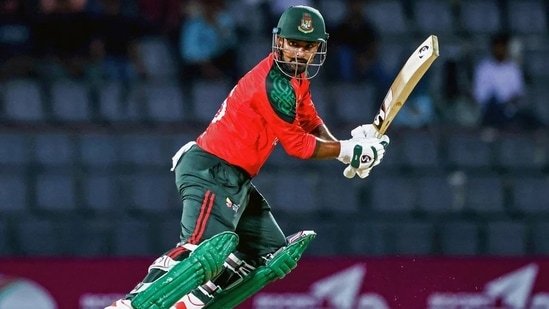
Four months after Bangladesh‘s fallout with the ICC, which resulted in the team’s removal from the T20 World Cup in India, one question continues to linger: who actually made the decision to boycott the tournament?
Back in February, Bangladesh’s interim sports advisor Asif Nazrul had claimed that the decision not to participate in the World Cup was taken by the players and the Bangladesh Cricket Board (BCB), and not by the government. But captain Litton Das has once again contradicted that narrative, reiterating that the players were never part of any discussion regarding participation.
Why did Bangladesh not play in the T20 World Cup?
Rising tensions in the neighbourhood earlier this year prompted Kolkata Knight Riders, reportedly at the BCCI’s behest, to release Bangladesh fast bowler Mustafizur Rahman from their IPL squad. The development escalated matters, with the BCB subsequently demanding that the ICC move Bangladesh’s World Cup matches out of India, citing safety concerns.
After assessing the situation, however, the ICC found no security threat to Bangladesh at the venues scheduled to host their group-stage matches. The governing body repeatedly urged the BCB to reconsider its position, but the board stood firm. The ICC, in turn, refused to relocate the fixtures. Following weeks of deadlock and unsuccessful negotiations, Bangladesh were removed from the tournament and replaced by Scotland.
Who made the decision to boycott the T20 World Cup?
Asif met the Bangladesh players on January 22 after Litton publicly stated that the squad had no involvement in the discussions and that even the senior players had not been kept informed.
Following the meeting, which was largely described as a briefing session, Asif openly stated that the government had made the decision to skip the tournament.
“The purpose of the meeting was simply to explain to the players why the government took this decision and give them the context. I believe they understood. That was the purpose — nothing else,” he had told reporters.
However, in February, Asif appeared to reverse his stance, claiming that the decision had instead been taken collectively by the BCB and the players.
“There is no question of regret (not playing the World Cup). This decision was taken by the BCB and the players as they made sacrifices for the safety of the country’s cricket, the safety of the people and to protect national dignity,” he had said.
A Cricbuzz report later claimed that Asif was a key influence behind Bangladesh’s decision to skip the World Cup, amid the interim government’s anti-India stance following the 2025 student-led movement that toppled the Awami League government.
Litton reiterates his stance
Speaking to Prothom Alo, Litton revealed that the players never viewed the January meeting as a consultation and understood it to be little more than a formality.
“There was never a question. We only went there to participate and have tea. It was merely a media stunt. So, we too had the same mindset,” he said.
The senior batter further revealed that the players were only informed about the decision. While they were asked for their views, the squad made it clear that they wanted to play. According to Litton, those views were quickly dismissed on the grounds of safety concerns in India.
He pointed out that Bangladesh had previously toured Pakistan despite far greater security challenges, with armed personnel stationed outside the team hotel.
“They just asked us what we wanted. Now, as a player, what do you want? We, of course, did not want to fight; we wanted to play cricket. But they questioned safety in India. I said that we played cricket in Pakistan, where they used to stand with guns outside the room. What could be more dangerous than that? But this was their call; we had no say as players,” he said.
When the interviewer reminded him of Asif’s remarks, Litton smiled before delivering a pointed response.
“Does he hold any post now? That is why he said those things.”
