


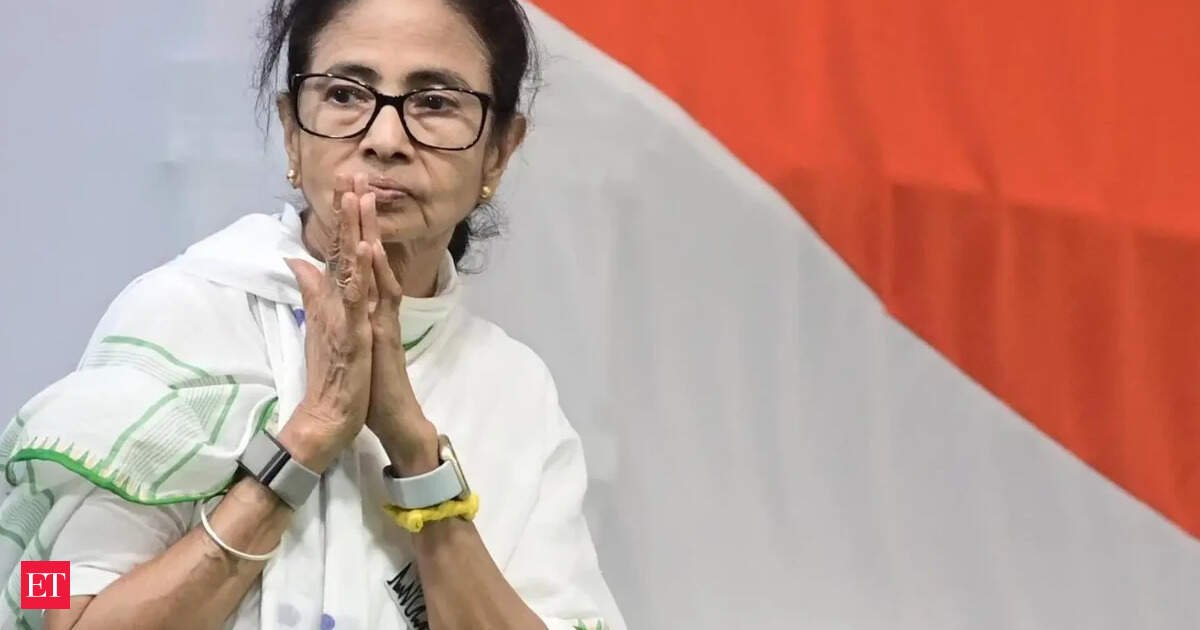
The reconstituted organisational committee, announced after a meeting of the party’s national executive at Banerjee’s Kalighat residence, marked a clear shift away from the next-generation leadership that had risen in recent years under the stewardship of party national general secretary Abhishek Banerjee.
While Abhishek retained his post as national general secretary, the party appointed Rajya Sabha MPs Derek O’Brien and Dola Sen as national joint secretaries to assist him — a move widely seen within political circles as an attempt to institutionalise collective decision-making at the top and dilute the concentration of organisational authority.
Also Read: Mamata Banerjee must remain supreme leader, not adviser: Dissent surfaces in TMC rebel camp
The changes come just two days after the TMC dissolved all its committees and frontal organisations across West Bengal following a revolt by a large section of its MLAs, who have challenged the party leadership after its recent electoral setback.
In another significant decision, senior minister Chandrima Bhattacharya replaced veteran organiser Subrata Bakshi as the party’s state president.
Bakshi, one of the architects of the TMC’s organisational expansion since the late 1990s and among Mamata Banerjee’s most trusted political lieutenants, was shifted to the position of vice-president in the national working committee.Party sources said Bakshi had repeatedly sought to be relieved of organisational responsibilities because of age and health-related concerns.
The new state committee bears the unmistakable imprint of Mamata Banerjee’s trust on old-timers and loyalists.
Equally striking was the absence of Firhad Hakim from the revamped organisational structure.
A trusted Mamata Banerjee lieutenant for over two decades and one of the party’s most recognisable minority faces, Hakim’s omission came hours after he stepped down as Kolkata mayor.
The development is likely to trigger fresh speculation about his equation with the leadership at a time when the party is navigating its most turbulent phase since inception.
In a committee otherwise packed with old loyalists, the exclusion of Hakim stood out.
Several leaders regarded as part of the old guard and personally loyal to the chief minister have been entrusted with key positions, while a number of younger leaders who had emerged as influential voices in recent years and were perceived to be close to Abhishek Banerjee found themselves absent from the list.
Political observers described the exercise as much more than a routine reshuffle.
“This is not merely reorganisation. This is reassertion when the party is facing its biggest crisis. The message is that at a time when the party is under attack from within, Mamata Banerjee is falling back on leaders whose loyalty has been tested over decades,” a senior political analyst said.
The appointments reflected that strategy. Sajda Ahmed, Mamata Thakur, Nayana Bandyopadhyay and Swati Khandekar were appointed vice-presidents of the West Bengal Pradesh Trinamool Congress Committee, while Babar Ali, Pulak Roy, Ashima Patra, Aroop Biswas and Rajib Banerjee were named state general secretaries.
Jyotipriyo Mallick, Rana Chatterjee, Bidesh Bose, Trinankur Bhattacharya, Jaya Dutta, Tapas Chatterjee, Vasundhara Goswami and Goutam Deb were inducted as executive members.
Among the frontal organisations, Saayoni Ghosh was re-appointed president of the Trinamool Youth Congress, with Madhurima Thakur as general secretary.
Mala Roy was named president of the Mahila Trinamool Congress, Priyanka Adhikary was given charge of the Trinamool Chhatra Parishad, while Moloy Ghatak was appointed president of the labour wing INTTUC.
Madan Mitra was assigned charge of the hawkers’ organisation, Becharam Manna of the farmers’ wing, Purnendu Bose of the agricultural labourers’ wing, and Birbaha Hansda of the SC-ST cell.
Chandrima Bhattacharya, Kalyan Banerjee, Madan Mitra and Kunal Ghosh will serve as party spokespersons, while Subhasish Chakraborty was appointed treasurer.
For a party born out of rebellion in 1998 and built around Mamata Banerjee’s authority, the current turmoil has presented a challenge unlike any it has faced before.
The revolt by a large section of legislators has exposed fault lines that many within the party privately acknowledge had been widening for years — over leadership, access to power, candidate selection and the growing divide between the old organisational network and a younger leadership cohort.
The TMC suffered the first split in its 28-year history on Wednesday as 58 rebel MLAs wrested control of its legislature party, elected expelled leader Ritabrata Banerjee as Leader of Opposition and secured recognition from the Assembly Speaker, plunging Mamata Banerjee’s outfit into its gravest internal crisis since its inception.
Friday’s reshuffle suggests that Mamata Banerjee’s immediate priority is not experimentation but consolidation.
The inclusion of familiar organisational faces and the relative absence of several younger leaders indicate a preference for reliability over reinvention at a time when the party’s unity is under strain.
As the TMC confronts the gravest internal crisis of its existence, Mamata Banerjee has chosen to fight it with the one resource she has trusted throughout her political career — her old guard.
