


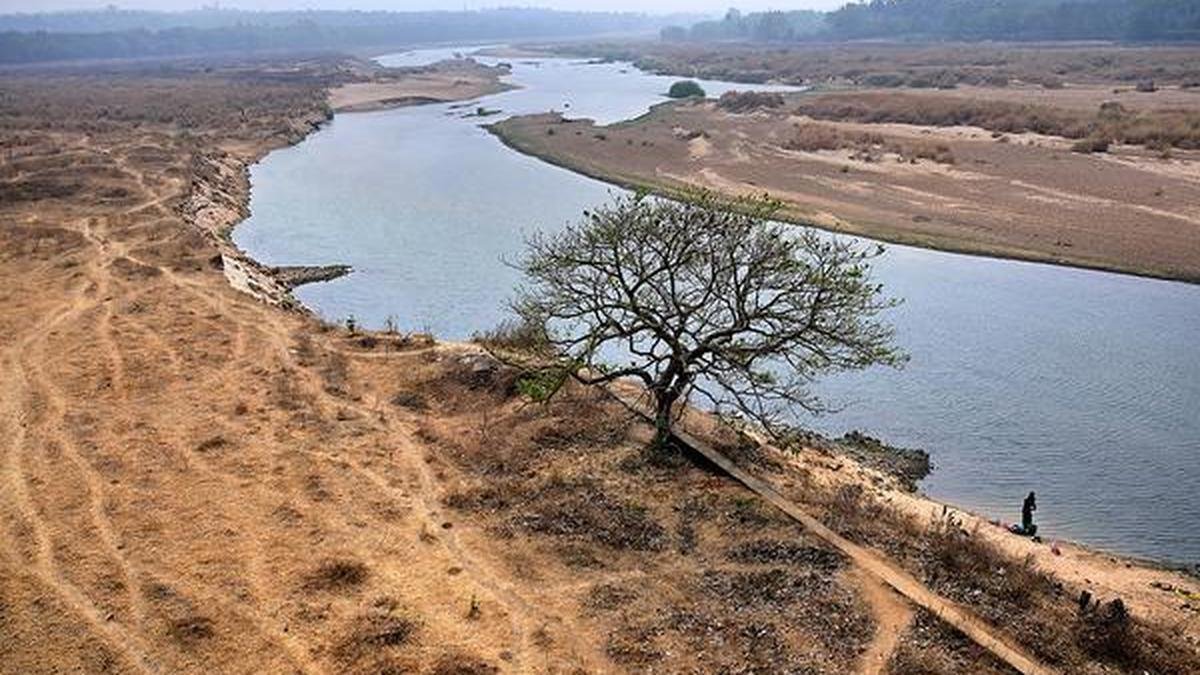
The environment is what sustains all biotic and abiotic processes. The monsoon, for which India is known, and the environment together sustain India’s economy as well as its food, water, energy, health, and national security. On this World Environment Day, it is worth walking through the inseparable coexistence of India’s economy and the environment. If we ignore the environment, we do so at severe risk to India’s economic development.
It is traditional to think of economic development and sustainability as parts of the overall socioeconomic framework while environmental issues often enter the picture as an afterthought. But the environment is an integral part of sustainability, society, and economy. As the well-known American economist Herman Daly noted, it is a fallacy to treat the environment as a sphere similar to economy and society. Daly spent his life making cogent arguments about how economies and societies operate within the environment and that economic growth and societal comforts are typically accomplished by exploiting the environment.
Protecting the environment thus requires us to carefully track our impacts on the environment as a whole — including air, water, land, and ocean pollution as well as the health of all species.
Monsoon variability
India is unique among the world’s countries for its economy’s dependence on the monsoon, directly and indirectly. The monsoon’s variability and changes in its patterns are the result of the local amplification of global drivers such as climate variability, climate change, and global warming.
The local amplifiers of monsoon variability and change are all environmental factors: some are natural but more and more are now human-made. Land conversion and deforestation for urbanisation, agriculture, infrastructure development, etc. all affect interactions between land, the atmosphere, and the oceans. They also enhance the variability of the monsoon as well as its sensitivity to global warming. In fact, ‘environmental change’ is a more accurate term for the complex interactions between human and natural systems over India.
The Indian economy’s dependence on the monsoon is in large part because of agriculture. Even if this sector contributes less than 20% of the GDP, nearly half the country is employed in this sector and more than 70% of rural India’s livelihoods depend on it. More than half of India also still lives in rural areas, although this fraction is shrinking as the country urbanises, helped along by a rural to urban and peri-urban transformation driven by the risks of agriculture as a way of life. And this very risk is accelerated by environmental degradation and weather and climate extremes.
Kharif grain production is nearly matched now by the rabi harvests — yet both crops face important challenges in the form of concentrated bursts of rain, heavy unseasonal rains, flooding, droughts during the monsoon season, and heatwaves. As human economic development degrades the environment, the latter’s ability to buffer agriculture from climate hazards also dwindles.
Further, the consequences of weather extremes — in the form of landslides, glacial lake outburst floods, cloudbursts, etc. — are related to the way local environment change amplifies global warming. This is a direct consequence of humans separating weather and climate predictions and disaster management from the environment and its protection.
Advances in weather, climate predictions
India has invested considerably in predicting the weather and the climate and the results have been paying off handsomely in terms of protecting lives and livelihoods. This particular mechanism is crucial to sustain economic growth and stay on track for ‘Viksit Bharat’. India’s green cover has also increased — although controversially so as some of the new additions are in the form of plantations, which have less biodiversity and thus less flourishing ecosystems relative to natural forests.
This said, the risks to the environment, which sustains the whole of India’s socioeconomic ecosystem, continue to multiply. The country urgently needs effective strategies to translate its weather and climate predictions to environmental predictions as well. Specifically, an environmental prediction would extend the physical predictions to include ecological and human systems together. Importantly, they could help turn projects of economic development into more holistic socioeconomic activities that also sustain the physical, chemical, and biological environments for everyone. Environmental predictions will also help integrate the goals of economic development into agricultural goals, urbanisation, energy and water management, industrialisation, and sustainability.
For example, housing developments can be expected to continue to grow for the foreseeable future. The disproportionate consequences of urban cover on climate change are already being returned with full interest as disproportionate climate impacts on urban centres. Housing developments try desperately to provide green cover, but without considering all the embedded climate and environmental impacts, such attempts are almost always futile. Many instances of such development are also happening on unsafe mountain slopes or close to the coasts.
In this domain, effective environmental predictions could combine short-term weather and climate predictions to manage crises with longer-term predictions that could inform the construction of resilient cities and rural dwellings that also protect the environment.
Environmental change is here but it doesn’t have to be here to stay. Every day is Environment Day for India — not only over land but also over the seas. India’s dreams of becoming an economically developed nation depend on protecting the environment so that its land and coasts are protected as well. That is the only way to bring about high standards of living along with real well-being for all its citizens, both human and otherwise.
Raghu Murtugudde is a visiting professor at the Kotak School of Sustainability, IIT Kanpur, and emeritus professor, University of Maryland.
Published – June 05, 2026 07:30 am IST
