


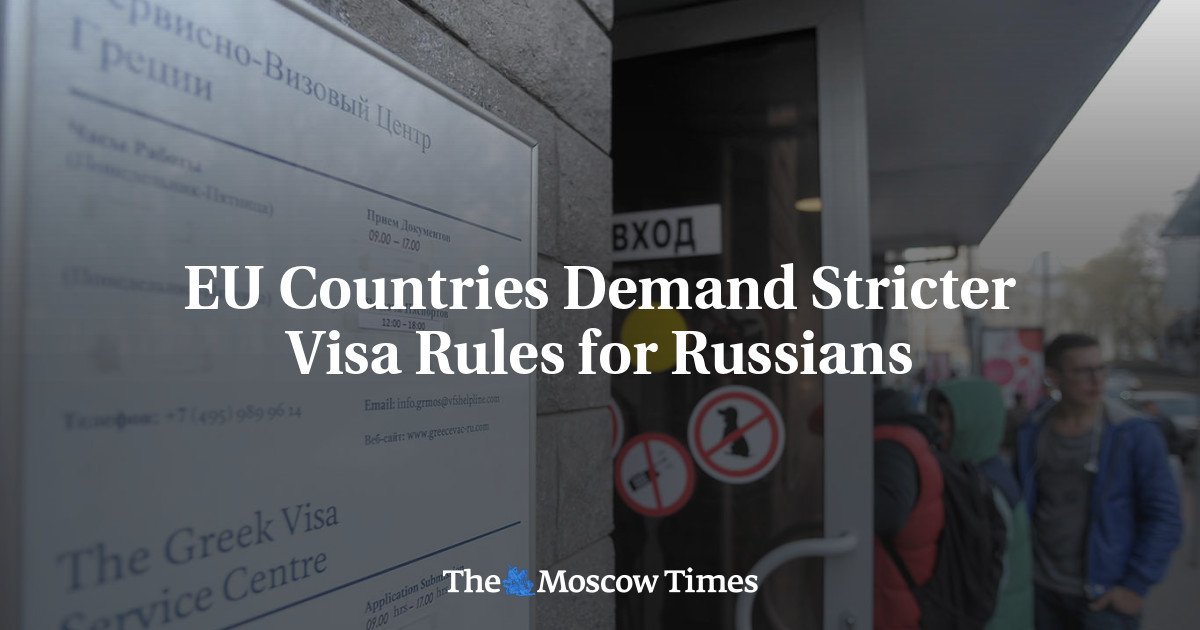
A group of European countries has called on Brussels to make it harder for Russians to vacation within the Schengen area as the war in Ukraine grinds through its fifth year.
EU interior ministers were discussing the issue on Thursday at a meeting in Luxembourg. That talk was prompted by a letter signed earlier this week by Poland, Norway, the Baltic states and nine other members of the free-movement Schengen area.
“It has been deeply troubling to witness increasing numbers of Russian tourists enjoying leisure travel on European beaches and in European resorts while missiles and drones continue to strike civilians and civilian infrastructure in Ukraine,” the letter, seen by AFP, said.
The signatories called for “new restrictive and binding visa measures,” arguing that easy access to Europe poses security risks. The letter also stressed that better procedures are needed to identify Russians who fought in Ukraine and prevent them from entering Europe.
The EU has already suspended its visa facilitation agreement with Russia and moved to deny Russians multi-entry visas last November. The number of visas issued to Russians dropped from more than four million before the war to about half a million in 2024.
Hawkish EU countries argue that more steps are needed and that current rules are applied unevenly across the bloc.
According to the June 2 letter, European countries still issued more than 470,000 tourist Schengen visas to Russian citizens in 2025, many of which allowed multiple entries.
Popular tourist destinations, such as France, Spain and Italy, are among the countries that issue the most visas.
“I want there to be no more shopping weekends. I want there to be no more fancy trips to Europe while Ukrainians are dying on the battlefield,” Sweden’s Migration Minister Johan Forssell told reporters at the Luxembourg talks. “This situation is completely insane, and it needs to be stopped.”
While proponents argue that ordinary Russians should feel more impact from the war, other EU nations counter that using visa restrictions as a blanket punitive measure would be wrong.
Some EU diplomats argue that travel to Europe helps expose Russians — who live under a tightly controlled media environment at home — to different narratives and ideas.
Russian opposition figure Yulia Navalnaya also spoke out against the move in September, warning that broad restrictions would be a “serious mistake” because they would feed the Kremlin’s narrative that Europe is hostile to all Russians.
