


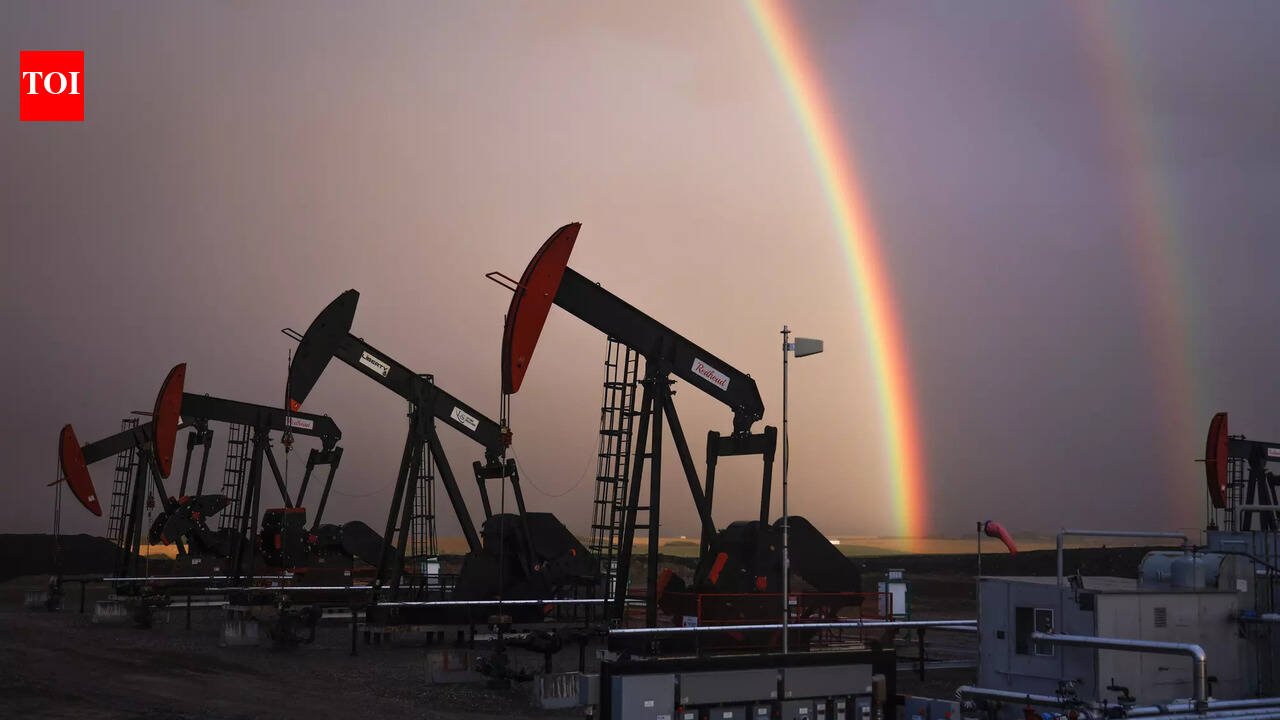
Russia, for the first time, has publicly acknowledged a dip in its oil production this year, even as it assured that the country was continuously stepping up its “export infrastructure to its maximum capacity.”Speaking to reporters at the St Petersburg International Economic Forum on Thursday, deputy Prime Minister Alexander Novak said that current output was lower than at the start of the year because a number of refineries were undergoing unscheduled repairs. His remarks mark the first explicit admission by a Russian official that the country’s oil production has fallen in 2026.“Current production is indeed somewhat lower than it was at the beginning of the year,” Novak said.“This is due to the fact that a number of our oil refineries are currently undergoing unscheduled maintenance.”Russia, the world’s third-largest oil producer, has not published official oil production data since April 2023, a little over a year after the start of its war with Ukraine. Meanwhile, Russia’s crude oil exports through its western ports rose 15% in May from the previous month, according to two industry sources familiar with the data, as refinery disruptions pushed Moscow to send more crude to international markets. The increase comes amid a wave of Ukrainian drone attacks targeting Russian refineries and oil export facilities. The strikes have disrupted fuel supplies, strained refinery operations and added pressure on the country’s oil industry. Russia’s oil production fell in April, according to the International Energy Agency, reflecting the growing impact of the attacks on the sector.
Refineries under pressure
Novak did not specify what had caused the refinery maintenance. His comments, however, came as Ukraine has intensified long-range drone attacks on Russian energy infrastructure in recent months, targeting facilities linked to oil production and exports.On Wednesday, Ukrainian President Volodymyr Zelenskyy said Ukrainian long-range drones struck an oil terminal in St Petersburg, setting it on fire while the city was hosting its annual international economic forum. According to Zelenskyy, the drones travelled more than 1,000 kilometres to reach the target.Russian authorities confirmed that infrastructure in the city had been targeted but did not provide additional details. The attack briefly disrupted operations in St Petersburg, with authorities suspending flights at the city’s airport overnight and cutting mobile internet services.Ukraine has repeatedly targeted oil facilities in St Petersburg and nearby ports. Zelenskyy also said overnight drone attacks hit the Kronstadt naval base, a long-standing base of Russia’s Baltic Fleet, and a manufacturing plant involved in weapons production in Russia’s Tambov region, around 600 kilometres from Ukraine.Ukraine says its long-range attacks are aimed at reducing Russia’s oil production and disrupting weapons manufacturing, both of which are considered important to Moscow’s war effort.
Russia’s crude portfolio
While Russia has not released official production figures for more than three years, data from the International Energy Agency points to a slowdown in output. According to the agency, Russia’s crude oil production fell by 460,000 barrels per day in April compared with a year earlier, dropping to around 8.8 million barrels per day.Russia’s oil and gas revenues, which contribute about one-fifth of the country’s total budget income, rose 32.4% year-on-year to 678.9 billion roubles ($9.3 billion) in May, according to Finance Ministry data released on Wednesday. The increase was driven by a rally in global oil prices amid the conflict in the Middle East.However, revenues were down 20.7% compared with April, when the budget received additional income from profit-based taxes that are paid on a cyclical basis.Novak said that Russia was continuing to maximise exports despite the refinery disruptions. “Naturally, we are utilising our export infrastructure to its maximum capacity. As the refineries return to full operational mode, production will increase and return to its previous levels.”
Ukraine continues to hit Russian energy sites
Ukrainian long-range drones struck an oil terminal in St Petersburg on Wednesday, setting it ablaze and sending thick plumes of smoke over Russia’s second-largest city, according to President Volodymyr Zelenskyy. The attack came as St Petersburg hosts its annual international economic forum, one of Russia’s flagship events aimed at attracting foreign investment.Zelenskyy said the drones travelled more than 1,000 kilometres (600 miles) to reach the target. The strike followed a major Russian drone and missile assault on Kyiv and other Ukrainian cities a day earlier.In recent weeks, Kyiv has intensified its attacks on Russian energy infrastructure, targeting facilities linked to oil production and exports as efforts to reach a peace settlement in the war have failed to yeild results.
- Yaroslavl Refinery (May 25): Ukrainian forces attacked the refinery located about 700 km from the Ukrainian border. The facility has a processing capacity of 15 million metric tonnes per year, or roughly 300,000 barrels per day (bpd).
- Syzran Refinery, Samara Region (May 21): Ukrainian drones struck the Rosneft-owned refinery. The attack damaged a primary processing unit, forcing operations to halt. The refinery can process 8.5 million tonnes annually (170,000 bpd).
- Tuapse Refinery, Black Sea Port (May 27): Ukraine said it struck the refinery after an earlier drone attack on April 28 caused a major fire and suspended operations. The refinery has a capacity of 12 million tonnes per year (240,000 bpd).
- NORSI Refinery, Nizhny Novgorod Region (May 20): Ukraine said it hit the refinery’s main processing unit. Russia’s fourth-largest refinery and second-largest gasoline producer, NORSI can process 16 million tonnes annually (320,000 bpd).
- Moscow Refinery (May 17-19): The refinery in Moscow’s Kapotnya district reportedly stopped processing after a drone attack. The facility has an annual processing capacity of around 11 million tonnes of oil.
- Ryazan Refinery (May 19): Processing halted following a Ukrainian drone strike. The refinery accounts for nearly 5% of Russia’s total refining volumes and processed 13.1 million tonnes of crude in 2024.
- Astrakhan Gas Processing Plant (May 13): Drone debris sparked a fire at the facility. The plant can process 12 billion cubic metres of gas annually and 3 million tonnes of stable gas condensate.
- Perm Refinery (May 7): A drone attack caused a fire and damaged equipment, halting processing. The refinery processed 12.6 million tonnes of oil in 2024, equivalent to about 250,000 bpd, according to Reuters.
- Ufa’s Bashneft-Novoil refinery: Ukraine said it struck the refinery, located over 1,400 km from the border and capable of processing more than 7 million tonnes of oil annually.
- Kirishi refinery: Operations were halted after Ukrainian drone attacks at one of Russia’s major fuel-producing facilities.
- Ust-Luga processing complex: A drone-triggered fire forced Novatek to suspend gas condensate processing and naphtha exports at the site, which processed 8 million tonnes of gas condensate in 2025.
Ukrainian drone attacks also sparked fires at Temryuk port, Yaroslavl fuel storage facilities, the Primorsk oil export hub, a Transneft pumping station supplying Primorsk, a Samara oil dispatch facility, and the Sheskharis oil terminal on the Black Sea coast.
