


By Akhil Damodaran
Rethinking the role of faculty in the AI era
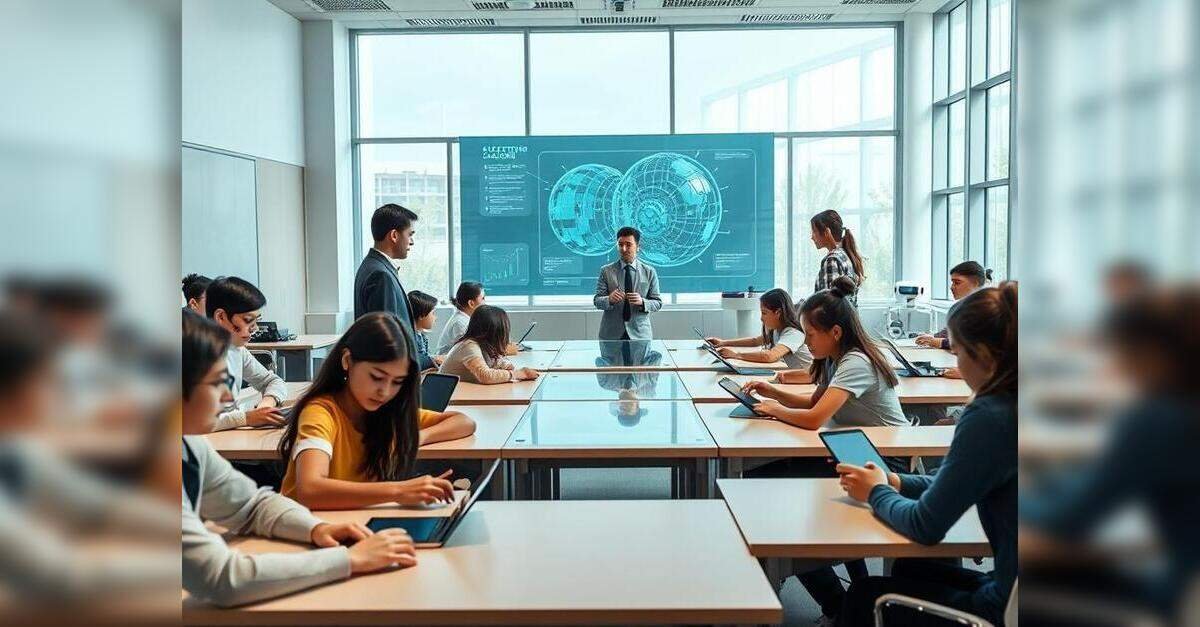
Artificial Intelligence is rapidly reshaping higher education, but one of the biggest misconceptions is that AI will reduce the importance of teachers. In reality, the opposite is happening. The future classroom is not about replacing faculty members with machines; it is about giving educators new tools to teach with greater creativity, depth and scale.
For years, educators were increasingly described as facilitators rather than traditional teachers. However, the rise of AI is expanding the role of faculty far beyond facilitation. Teachers are becoming designers of learning experiences, creators of simulations, mentors, strategists and guides for personalised learning journeys.
AI is not weakening the role of educators. It is strengthening the capabilities of those who know how to use it meaningfully.
From content delivery to experience creation
One of the most visible shifts in education is the move from passive learning to immersive learning. AI allows faculty members to create simulations, role plays, gamified exercises and scenario-based learning experiences much faster than before.
A marketing faculty member can create a real-time pricing simulation. A finance professor can turn capital budgeting into a live boardroom exercise. Human resource faculty can design negotiation environments, leadership scenarios and conflict-resolution challenges that resemble real workplace situations.
The classroom increasingly becomes a space for experimentation, problem-solving and decision-making rather than only theoretical discussion.
The rise of AI-assisted learning systems
Custom AI assistants and GPT-based tools are also changing how students learn outside the classroom. Faculty members can now build systems aligned with their own teaching style and subject expertise.
Students can interact with AI-powered interviewers, recruiters, mentors or evaluators to practice business communication, presentations, negotiations and case discussions. Learning becomes more interactive and continuous rather than limited to classroom hours.
This shift has the potential to make education more application-oriented and industry-relevant.
AI is also changing academic operations
Another important development is the growing ability of institutions to build their own academic tools using AI-assisted platforms.
In the past, many institutions depended heavily on expensive external software for assessments, dashboards and academic administration. Today, smaller academic teams can create customised solutions tailored to their own requirements.
AI is also helping reduce repetitive academic work. Tasks such as rubric creation, assessment design, documentation, feedback summaries and question-bank generation can now be completed more efficiently. This allows faculty members to spend more time on mentoring, research, classroom engagement and innovation.
The importance of responsible AI usage
At the same time, the rise of AI in education brings important responsibilities.
AI systems can generate inaccuracies, bias and unreliable outputs if used without proper oversight. The future therefore belongs not to educators who use AI blindly, but to those who can guide, verify and govern it responsibly.
Faculty members will increasingly need skills such as prompt literacy, AI validation, ethical judgement and critical evaluation. The ability to question AI outputs may become just as important as the ability to generate them.
Why human faculty will continue to matter
Teaching has never been only about delivering information. It is also about mentorship, emotional intelligence, motivation and human connection.
AI can generate content and automate processes, but it cannot replace empathy, ethical guidance or the ability to inspire students during moments of uncertainty and growth.
Students still look toward educators for confidence, perspective and direction — qualities that remain deeply human.
The future of teaching
The future of education is not “AI versus faculty.” It is the difference between traditional teaching and AI-empowered teaching.
Faculty members who learn to work effectively with AI will be able to create richer learning experiences, improve engagement and make education more practical and adaptive than ever before.
The classroom of the future will still need great teachers. The difference is that those teachers will now be supported by powerful AI-driven capabilities that expand what education can achieve.
The author Akhil Damodaran is the Director of Symbiosis Centre for Management and Human Resource Development (SCMHRD).
DISCLAIMER: The views expressed are solely of the author, and ETEDUCATION does not necessarily subscribe to it. ETEDUCATION will not be responsible for any damage caused to any person or organisation directly or indirectly.
