


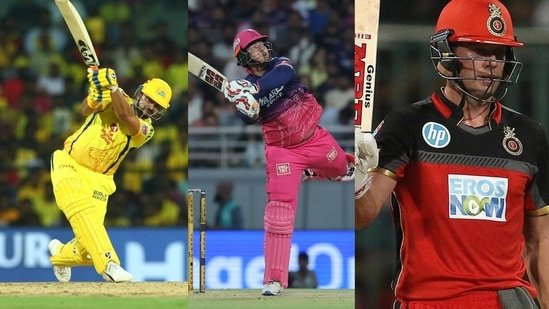
Vaibhav Sooryavanshi did not merely announce himself in IPL 2026. He attacked the tournament’s oldest assumption. That young batters need time, bruises and slow adaptation before they can handle a league full of international bowlers.
He is just 15. He played his first complete IPL season. He finished with 776 runs in 16 matches, an average of 48.50, a strike rate of 237.31, 72 sixes, the Orange Cap, the MVP award, the Super Striker award, the Emerging Player award and the Most Sixes award. That is not a great junior season. That is one of the most violent batting campaigns the IPL has produced from anyone, at any age.
The real scale becomes visible when his full IPL record at that checkpoint is set beside some of the greatest batters the league has known. Vaibhav had played a partial season in 2025 before completing his first full campaign in 2026. At this point, his career reads: 1028 runs in 23 matches, average 44.69, strike rate 228.95, two hundreds, six fifties.
That is when the comparison stops being flattering and starts being serious.
The only name that survives first contact is Gayle
At the same first complete season checkpoint, Chris Gayle had scored 1071 runs in 28 matches. Average 44.62, strike rate 162.52, two hundreds, five fifties.
That is the only name in the comparison that comes close on volume. Gayle had 43 more runs. Vaibhav needed five fewer matches to get there. Gayle carried the aura of a fully formed T20 destroyer. Vaibhav had the body of a teenager and the output of a cheat code.
The averages are almost identical: 44.69 against 44.62. The hundreds are level at two each. But the strike rate gap is where the comparison becomes something else entirely. Vaibhav’s 228.95 is not just ahead of Gayle’s 162.52. It is ahead by 66 runs per 100 balls.
Vaibhav did not merely match early Gayle on productivity. He produced his runs at a pace even Gayle never touched at that stage of his IPL career.
That is the spine of the argument. His early numbers are not just impressive because he is young. They are alarming because they match the greatest power hitting benchmark on volume and crush it on tempo.
Everyone else is behind the blast radius
The rest of the field makes clear just how unusual Vaibhav’s start truly is.
AB de Villiers, at the same checkpoint, had 560 runs in 21 matches. Average 40.00, strike rate 122.80. AB would eventually become one of the most complete and imaginative T20 batters the game has seen, but his early IPL record was still taking shape. Vaibhav has nearly doubled that run tally at the same stage, at a strike rate more than 100 runs higher.
David Warner had 445 runs in 18 matches, average 26.17, strike rate 137.77. Warner later became one of the IPL’s great openers, a relentlessly reliable overseas run machine. But his first complete season checkpoint falls well short of Vaibhav’s on volume, average and aggression.
Suresh Raina had 421 runs in 16 matches, average 38.27, strike rate 142.22. Raina built his legacy on consistency, adaptability, sharp fielding and playoff nerve. He became an institution. But Vaibhav’s early record carries more than twice his runs and a strike rate nearly 87 runs per 100 balls higher.
MS Dhoni had 414 runs in 16 matches, average 41.40, strike rate 133.54. Dhoni’s greatness was never about top order volume alone. It lived in finishing, leadership, pressure and tactical intelligence. Even measured purely as a batting comparison, Vaibhav is in a different register at this stage.
Rohit Sharma had 404 runs in 13 matches, average 36.72, strike rate 147.98. Shikhar Dhawan had 340 runs in 14 matches, average 37.77, strike rate 115.25. Jos Buttler had 255 runs in 14 matches, average 23.18, strike rate 138.58. Virat Kohli had 165 runs in 13 matches, average 15.00, strike rate 105.09.
These names went on to define the IPL across different eras. Kohli became the league’s all time run king. Buttler delivered one of the great single season peaks. Dhawan quietly accumulated thousands. But at this identical early checkpoint, none of them were within reach of Vaibhav’s numbers.
The strike rate changes what the runs mean
A 1000 run early IPL career is already rare. A 1000 run early IPL career at a strike rate of 228.95 is almost structurally impossible to explain.
That strike rate means Vaibhav Sooryavanshi was not accumulating while others exploded around him. He was the explosion. He was not giving Rajasthan good starts. He was breaking the shape of matches before the middle overs could settle, before the opposition could breathe, before the field spread even mattered.
This is important because the IPL has changed. Earlier generations of greats built large parts of their careers in an era when a strike rate of 140 to 150 was considered elite. The modern game asks openers to maximise the Powerplay, hunt match ups, and sustain aggression even as conditions flatten out. Vaibhav did not merely adapt to that demand. He exaggerated it beyond what any comparable talent had done at his stage.
His 2026 season ran on high risk dominance without the usual cost. Young power hitters typically offer teams volatility as a trade off. Vaibhav gave Rajasthan violence and ballast at the same time. The Orange Cap rewards volume. The Super Striker award rewards tempo. The MVP rewards all round match influence. Vaibhav collected all three because he did not win one category of batting contest. He conquered every category simultaneously.
The age is astonishing. The numbers stand without it.
There is a natural temptation to keep returning to his age, because it genuinely feels like fiction inserted into a scorecard. A 15 year old doing this in the IPL. It does not compute.
But the numbers require no age to justify serious historical treatment. Even if Vaibhav were 25 rather than 15, even if there were no story attached, 1028 runs at 44.69 and 228.95 after a first complete season would still demand to be placed in the conversation about the IPL’s most explosive early careers.
The age makes it astonishing. The strike rate makes it disruptive. The volume makes it undeniable.
That is why the full comparison matters. Most great IPL batters grew into their empires. They needed time to learn bowlers, find their game in the conditions, build the mental architecture that separates elite from exceptional. Vaibhav has opened his account with a season that already sits near the summit of early career IPL batting history, before any of that seasoning has taken place.
Verdict: not yet the greatest, but the greatest starting point
Vaibhav Sooryavanshi is not yet greater than Kohli, Gayle, AB, Warner, Rohit, Dhoni, Raina, Dhawan or Buttler in IPL history. Greatness still needs seasons, setbacks, tactical adjustments, playoff scars, the weight of expectation, the experience of failure and the harder test of how a player responds to it.
But at the first complete season checkpoint, he is ahead of almost all of them.
Only Gayle can stand beside him on volume. Even Gayle loses the strike rate contest by a wide margin. Everyone else falls short on runs, tempo, hundreds, fifties, or all of them at once.
The conclusion is precise: Vaibhav has not built the greatest IPL career. Not yet. But he has produced the greatest first full season launch of any batter in this comparison, and the gap between him and the rest is, in places, not even close.
The IPL has seen prodigies. It has seen monsters. In 2026, it got something stranger: a prodigy who batted like a monster from the very first ball.
