


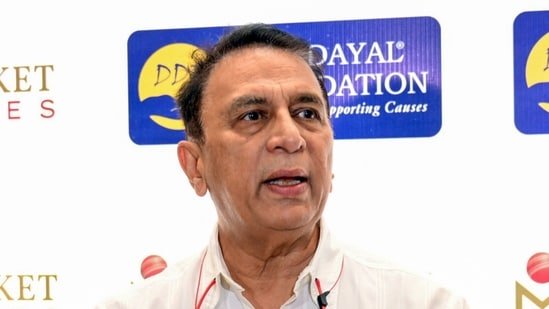
Sunil Gavaskar has warned IPL franchises against being carried away by performances in state and city leagues, arguing that several big hitters from those competitions were exposed once they faced the higher standard of bowling in the IPL.
The former India captain said the gap between smaller T20 leagues and the IPL remains significant, and franchises risk wasting money if their scouting systems are influenced by hype, agents, and isolated performances rather than repeatable skills.
“A lot of the big hitters in the various State and city leagues that have sprouted up were exposed when faced with the international quality of bowling in the IPL,” Gavaskar wrote in his Sportstar column.
His criticism was aimed at the growing auction trend of franchises investing heavily in players who dominate local T20 circuits but are not always ready for the intensity, pace, variation and tactical scrutiny of the IPL.
“Scouts and advisers have sold them a dummy”: Gavaskar
Sunil Gavaskar said the standard of batting and bowling in state and city leagues is “nowhere near as good” as the IPL, and franchises must ensure their talent spotters are not swayed by player agents or inflated performances.
“In the State and city leagues, the standard of both batting and bowling is nowhere near as good, and unless the scouts have a discerning eye and don’t get swayed by player agents, the franchises will keep picking players based on these performances and find they have wasted their money,” he wrote.
The sharpest part of Gavaskar’s column came when he questioned franchises that spend crores on players but barely use them during the season. According to him, such cases reveal a deeper failure in scouting and squad planning.
“When a franchise picks a player for crores and then doesn’t play him in more than a couple of games, it tells you that their scouts and advisers have sold them a dummy,” Gavaskar wrote.
The comment does not apply equally to every expensive uncapped player. Kartik Sharma, for instance, emerged as one of CSK’s better performers, while Prashant Veer also showed promise despite the pressure of his price tag. Gavaskar’s broader concern appears to be aimed at the hype pipeline itself: local-league power-hitters who do not translate that dominance into IPL impact, players who are bought for large sums but not trusted by their own franchises, and one-match performers who continue to earn contracts on the strength of isolated bursts.
Gavaskar also warned that the IPL is ruthless in exposing inflated reputations.
“The IPL very quickly finds a player out as being overrated and overvalued,” he wrote.
He added that franchises often continue to reward players who produce one performance in a low-pressure situation, even if the larger body of work is not convincing.
“Yet there will be players who will have one performance in the tournament, and it’s usually in a match of not much consequence for their team and on the basis of that performance be picked for another year,” Gavaskar wrote. “One could make at least four teams of such one-match performers who will be picked again and again in the IPL.”
Gavaskar speaks about Rishabh Pant stepping down
Gavaskar also touched upon Rishabh Pant stepping down as captain after his team finished at the bottom of the table, calling it the first major captaincy change ahead of next season.
He pointed to Pant’s repeated remarks about having “too many voices” around him, suggesting that it reflected poorly on the support staff.
“He did say on more than one occasion that there were too many voices in his ear and too many thought processes, which is definitely not a compliment to the support staff,” Gavaskar wrote.
Whether that leads to wider changes at the franchise remains to be seen, but Gavaskar’s larger warning is clear: IPL teams cannot keep confusing local-league noise with IPL certainty. The tournament’s standard is too high, the auction table too expensive, and the margin for bad scouting too thin.
