


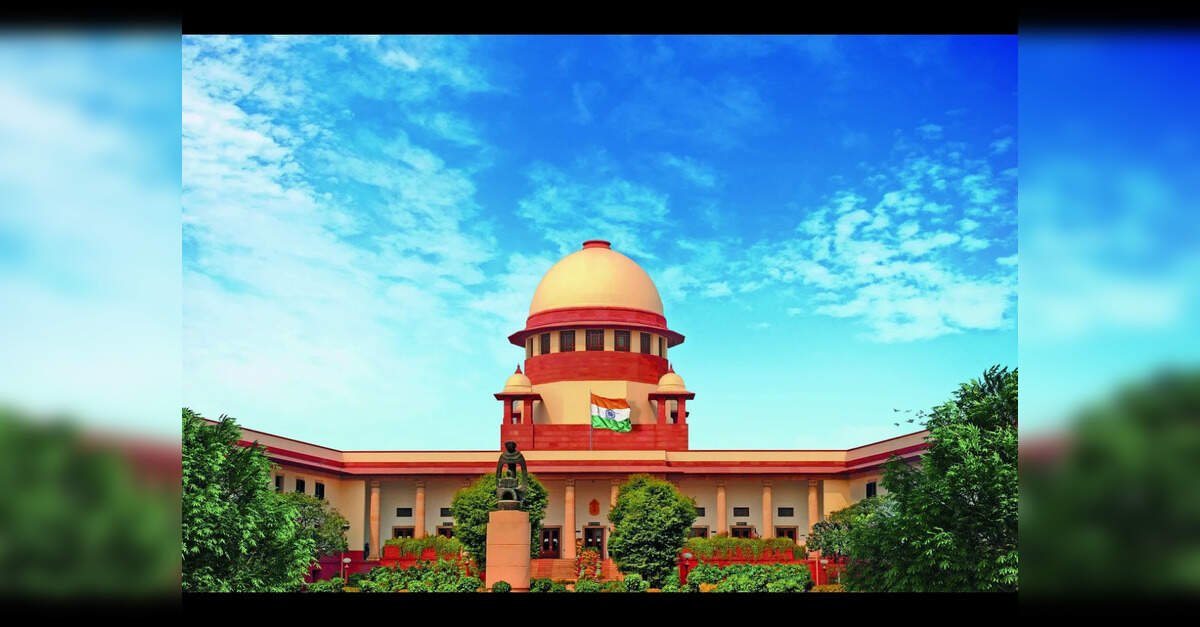
Mumbai: The squabble between India’s public trusts and tax authorities is about to boil over to the Supreme Court (SC).
The rift stems from the Income-tax department’s demand that deeds of these religious and charitable trusts must categorically state that the trusts are ‘irrevocable’.
The tax office is driven by fears of possible misuse where persons in control of the trust, or the settlors who form them, could strip the trusts of their assets and properties. This, it insisted, was a precondition for charitable and religious public trusts to enjoy tax benefits. Consequently, tax officers refused to renew registration to trusts where the ‘irrevocable clause’ was missing from the deeds.
When the department’s stand was challenged by six charitable trusts and two well-known professional bodies, the Bombay High Court, on March 9, 2026, held that the absence of an express irrevocability or dissolution clause cannot constitute a ground for refusal or cancellation of registration under Section 12AB of the Income-tax Act, 1961. The court believed that a public charitable trust is considered as irrevocable unless the settlor is specifically given the power to revoke it.
After this, the I-T department began renewing registrations of trusts, albeit with a caveat. For several charitable trusts, the department explicitly put in the condition that grant of registration was subject to outcome of the special leave petition (SLP) that the department was proposing to file to the Supreme Court against this order, sources told ET.
“We are in the process of filing an SLP. The department is not ready to accept the HC order,” said a senior I-T official.
The I-T department has renewed registration of parties which filed the writ. “However, it probably believes that a relief and automatic registration to all the trusts does not flow from the HC order the way it happens for a public interest litigation,” confirmed a senior tax professional.
The HC had also struck down all orders passed by the I-T director (exemptions), Mumbai, rejecting registration on the ground of absence of an irrevocable/dissolution clause. However, in certain cases, registration has been renewed without this condition.
The new I-T Act, which came into effect on April 1, 2026, requires charitable trusts to be irrevocable. Trusts which are opposing the I-T department’s view argue that there are several practical challenges in invoking an irrevocability clause in old trust deeds. “There has been no irregular transfer of assets in states like Maharashtra, which has trust laws. Here, actions would require clearance of the office of Commissioner of Charities”, said a senior advisor to multiple trusts.
Since the tax office is bent on resorting to all legal means, charities may have to think of a way to overcome the practical problems or persuade the department to accept indemnity bonds from trusts declaring they are irrevocable. “At some point, they will have to deal with it, given the role of the I-T department,” said another person. Under Section 12AB of the I-T Act, charitable trusts, NGOs and Section 8 companies enjoy tax-exempt status: they don’t pay income tax on donations, grants and income derived from property, provided at least 85% of their funds are utilised for charitable or religious purposes.
