


If time travel once belonged to the realm of Marvel Avengers films, Indian tax law experimented with it (the Finance Act 2012) to overcome the Supreme Court’s 2012 Vodafone order. That chapter was later rolled back, but the ghost of retrospective amendments has returned with the Finance Act 2026.
Retrospective taxation has re-entered India’s fiscal discourse as a response to litigations that exposed fault lines within the Income Tax Act, 1961. Over the past decade, the tax administration sought to distance itself from the perception of “tax terrorism” and high-handedness. The Union ministry of finance introduced reforms aimed at rebuilding taxpayer confidence through transparency and accountability. Among the reforms were the compulsory mandate requiring every income tax notice and order to carry a Document Identification Number (DIN), the transition to faceless assessments, and the extension of the faceless framework to reassessment proceedings, including their initiation. The DIN mechanism ensured that every communication carried the authority and traceability of a centralised system. The faceless assessment and reassessment regime, driven through randomised automated allocation and dynamic jurisdiction, sought to eliminate direct interaction between taxpayers and officials, curbing discretion, bias, and malpractice.
The difficulty arose because these jurisdictional safeguards were often not implemented by the authorities enforcing them. Notices and orders were passed without DIN. Reassessments were initiated by jurisdictional assessing officers (JAOs) instead of faceless assessing officers (FAOs), through the faceless architecture envisaged by law. Approvals to reopen assessments were granted mechanically. As high courts examined these issues, a pattern of invalidation emerged. Courts treated DIN compliance as a jurisdictional requirement and struck down notices lacking a valid identification number. They also invalidated reassessment notices issued outside the faceless framework. Similarly, approvals granted mechanically were held insufficient because the safeguard requiring independent application of mind went to the root of jurisdiction. Courts were not inventing safeguards. They were enforcing safeguards embedded within the law itself.
The fiscal impact was enormous, with reassessment and related proceedings involving substantial revenue stakes getting affected across the country. It was at this stage that the legislative response took shape. Instead of strengthening compliance with these safeguards, the Finance Act 2026 inserted retrospective provisions declaring that notices and orders would not become invalid merely because DIN was not mentioned in their body if it could otherwise be traced in the system. The amendments further declared that the competent officer for issuing reassessment notices was always intended to be an officer outside the faceless hierarchy and that approvals for reopening assessments were always administrative rather than quasi-judicial in nature. In effect, the law was retrospectively recast to validate what courts had invalidated. Similar provisions were also carried into the new Income Tax Act, 2025.
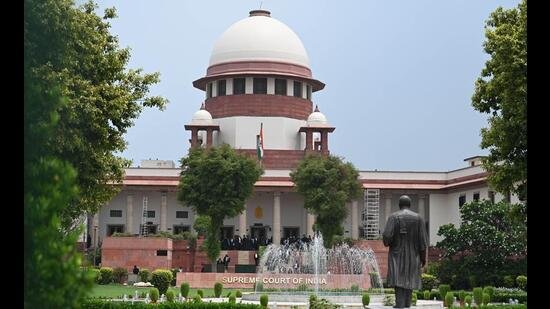
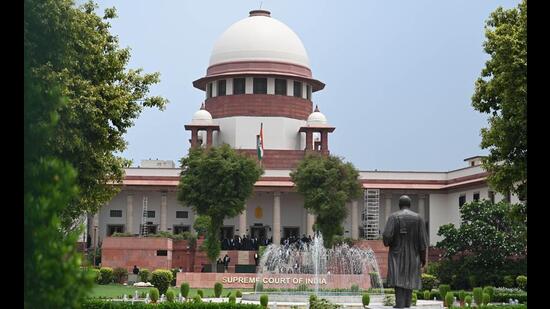
Taking note of these retrospective amendments, the Supreme Court set aside high court judgments and granted liberty to taxpayers to challenge the constitutional validity of the amendments. The court stayed further assessment proceedings until these constitutional questions were judicially examined.
The starting point for examining constitutional validity is Shri Prithvi Cotton Mills Ltd. v. Broach Borough Municipality. The apex court recognised the legislature’s power to enact retrospective laws but imposed a discipline: The legislature may remove the defect that led to invalidation, but it cannot simply declare a judicial decision wrong without curing the underlying defect.
The context of Prithvi Cotton Mills is instructive. The statute lacked a clear definition of the term “rate”. This created ambiguity, which led to judicial invalidation. The legislature responded by retrospectively defining the term and thereby filling the vacuum. The amendment cured the defect because the law itself was incomplete.
The present amendments stand on a different footing. The earlier framework relating to DIN, faceless reassessment proceedings, and approvals requiring independent application of mind was clear and deliberate. Courts did not invalidate actions because the law was uncertain; they did so because the law was not followed. This distinction forms the core of the constitutional controversy today.
The Supreme Court in CIT v. Vatika Township underscored that fairness and predictability are central to tax law and that retrospective amendments unsettling settled expectations must be approached with caution. Courts have also held that merely calling an amendment clarificatory or one for “removal of doubts” does not determine its true nature. This distinction forms the core of the constitutional controversy today. Taxpayers are held to strict standards of compliance, and similar lapses by the Executive cannot be retrospectively condoned merely because substantial revenue is involved.
The constitutional question now is: Do the amendments genuinely remove the defects identified by courts, or do they merely neutralise judicial decisions without addressing their foundation? The Constitution permits retrospective curing of defects. It does not permit retrospective rewriting of clearly expressed law by declaring that it always meant something else.
Like the time travel gambit in Avengers: Endgame, revisiting the past to fix present consequences may seem tempting, but when the rules of time itself are rewritten, the risk is not merely altering outcomes but disturbing the certainty, predictability, and trust on which a fair tax law stands.
Mayank Mohanka is partner, SM Mohanka & Associates, and founder, TaxAaram India.The views expressed are personal
