


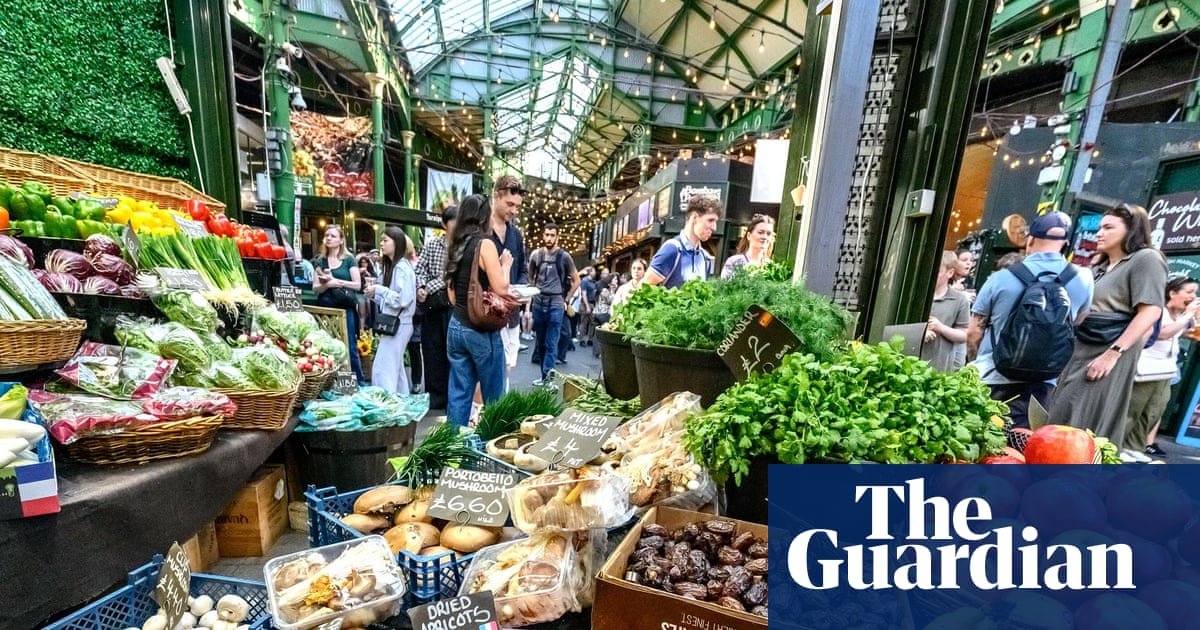
The news that the Treasury was asking UK supermarkets to cap price rises on essential foods was greeted with predictable squeals of horror this week. Supermarkets were reportedly “furious”, while luminaries from the former head of the Institute for Fiscal Studies to the former chair of M&S could be found harrumphing about the evils of price controls.
But this caterwauling is a distraction from two unpleasant facts. Firstly, the food price surge over the summer and beyond is likely to be significant – and will come on top of a near-40% rise in the price of food since 2020 – due to a devastating combination of the Iran war and a forecast record-breaking El Niño, which will hammer global food production. And secondly, Britain’s food system is painfully exposed to such shocks. The long-held assumption that a global food system can be relied on to meet the nation’s needs, at a reasonable price, no longer applies.
With about one-third of the fertiliser trade travelling through the strait of Hormuz, and about half of the world population’s food supply dependent on artificial fertiliser, the shock to global food systems will play out over the next year – regardless of how quickly the strait may or may not reopen.
The strait of Hormuz isn’t the only chokepoint in the global food system. In a prescient study from 2017, the foreign policy thinktank Chatham House said the world food system had become painfully exposed to 14 “critical junctures”, from the strait of Hormuz to the strait of Malacca, between the Malay peninsula and Sumatra, to the Black Sea ports that connect Ukrainian and Russian farmers to the world. The Panama canal is another; a multi-year drought across Central America has restricted transits through the freshwater-fed canal, which carries 16% of the world’s grain trade, forcing up global prices.
The theory that informs the UK’s approach is that this shouldn’t matter. Disruptions to harvests and transport in one part of the world will be compensated for with access to produce from another. As long as global markets remain open all will be well. For the last few decades, this has been broadly true globally, as malnutrition fell. The range and quality of food available in the UK has strikingly improved.
But world hunger has been rising since 2014, with Covid-19 markedly accelerating the trend. And a belief that open markets can always compensate for disruption flies in the face of the growing dependency of the whole system on a few “breadbasket” locations, with 60% of global food production occurring in just five countries. It also ignores the possibility of simultaneous shocks – precisely what the climate crisis, as it leaves weather systems more unstable, starts to make more likely.
This is now the danger. Potentially compounding the closure of the strait of Hormuz is the return of El Niño to the southern Pacific. Recurring every three to five years, El Niño is a vast movement of warm ocean water northwards that changes weather patterns across the globe. These effects vary, but will typically include much hotter, drier weather across east Asia and southern Africa, but much wetter, colder weather in South and Central America, spreading into the southern US. Worse droughts on one side of the world, and worse storms on another, naturally affect food production. Historically, stronger El Niño events are associated with about a 9% increase in global food prices, with significant variation: a major El Niño event in 2015-16 pushed 50 million people into food insecurity across southern and central Africa.
Forecasters in Europe and North America are increasingly sounding the alarm about a significant, record-breaking El Niño event over this year and into next. Meteorologists have talked of a “Godzilla” event, tearing up weather patterns – and harvests – from the Pacific coast to east Asia. If it occurs, the full effects of this, like the fertiliser shock, will be felt over the longer term – coming into autumn and next year’s harvests.
Britain’s domestic food system is not immune. Britain imports about 60% of its fertiliser, and 50% of its fossil gas. As a result, rising global fertiliser prices and energy costs are already provoking a “cost of farming crisis”, while the climate crisis is beginning to make its presence felt. Britain has had three of its five worst harvests on record in the last decade. Losses for farmers are beginning to mount. Last year saw the harvest value of wheat, barley, oats and oilseed rape fall by more than one-fifth below its long-run average, costing farmers £828m in lost revenues. Over the whole decade, lost revenues from those weaker harvests now come to £2.3bn.
Extreme weather is now affecting the great majority of British farms, with 86% of farmers reporting that they have been hit by extreme rainfall, and 78% by drought, in the last five years. Climate change is the quickening drumbeat behind the crisis in British farming.
Facing these risks, a market-led system is unlikely to function as expected. Supplies run short, forcing up prices, or provoking shortages. Profiteering emerges, as large companies in positions of market power in the supply system generate record earnings. The economists Isabella Weber and Evan Wasner have described how the combination of external shocks and market power can produce widespread inflation, meaning a sharp turn in the cost-of-living crisis. As prices of essentials rise, households cut spending elsewhere in the economy, squeezing demand, squashing growth and pushing economies into stagnation.
Our entire food system needs an overhaul. In private, the government recognises this. The grudgingly released summary of a still-secret Defra document on the national security risks from “ecosystem collapse” reported that “without significant increases in UK food system and supply chain resilience, it is unlikely the UK would be able to maintain food security if ecosystem collapse drives geopolitical competition for food … Countries best placed to adapt are those that invest in ecosystem protection and restoration, and resilient and efficient food systems.”
Global price shocks alone won’t force the change, as an Oxford University study of previous shocks found. Government action is needed. Tariff reductions on nuts, and pleading with the supermarkets are unlikely to deliver results. Like other countries, the UK needs to rebuild its strategic food reserves, abandoned in the mid-1990s. It needs tighter government control and regulation of essential foods, including well designed price regulations like those being introduced across the world. And it needs a focus on longer-term investments in its own farming, supporting farmers in a more volatile environment with proposals like a basic income for farmers, and incentives to build in more resilient, sustainable food production. The grave danger is that we remain bitterly exposed to events over which we have no control in an increasingly unforgiving world.
