


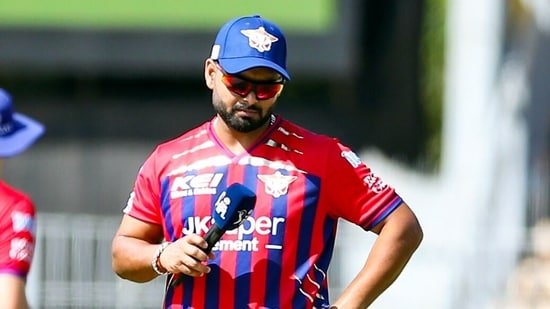
Rishabh Pant arrived at Lucknow Super Giants as the centrepiece of a new project, not only as another big-name signing. The ₹27 crore price carried more than batting value. It carried captaincy, Indian-player scarcity, wicketkeeping cover, brand weight, and the expectation that LSG were buying a player around whom the next cycle could be built.
The second season of that cycle has now ended, and the ledger does not give LSG much comfort. Pant had a season without enough value. For a franchise that has committed to paying him across a multi-year IPL contract, the question before 2027 is not emotional. It is financial and cricketing: can LSG justify carrying the same ₹27 crore annual burden after a year in which Pant recovered barely half of that cost?
Pant’s 2026 season was not a simple failure. That is what makes the debate more useful. He had two strong profit-making matches. He added leadership value. He still offered the rare profile of an Indian wicketkeeper-batter who can captain. Those things matter in the IPL market, where scarcity often inflates price.
But the IPL does not reward profile alone. Once LSG’s season is complete, Pant’s full ₹27 crore cost has to be judged against what he actually returned. On that basis, the gap is severe. His rating-adjusted season worth stood at ₹14.28 crore. His net loss was ₹12.72 crore. His cost recovery was only 52.90%.
That is the heart of the 2027 problem. LSG are not deciding whether Pant is a good cricketer. They are deciding whether a ₹27 crore commitment still makes sense when the return looked closer to a ₹14-16 crore player.
A season carried by two big nights
Pant’s ledger was shaped less by steady influence and more by isolated spikes. His best night came against Sunrisers Hyderabad in Match 10, when he generated ₹5.49 crore worth against a match cost of ₹1.93 crore. That single game gave LSG a profit of ₹3.56 crore.
His other major positive return came against Royal Challengers Bengaluru in Match 50. Pant produced ₹3.32 crore worth there and finished with a profit of ₹1.39 crore.
Those two matches were not minor bright spots. They were the season’s financial backbone. Together, they accounted for ₹8.81 crore of Pant’s total ₹14.28 crore worth. In other words, nearly 62% of his entire season value came from two matches.
That leaves the rest of the season exposed. Across the other 12 games, Pant generated only ₹5.47 crore worth against a cost burden of about ₹23.14 crore. That is where the contract begins to look heavy. For a mid-priced player, two major profit games can make a season respectable. For a ₹27 crore player, two profit games only underline how much more was needed.
The issue was not that Pant never influenced matches. The issue was that LSG paid for repeated influence and got scattered influence. The price demanded five or six major value nights, with the quieter games still limiting damage. Instead, the ledger shows two strong recoveries and a long run of under-return.
The batting bill hurt more than the captaincy bill
Rishabh Pant’s season has to be split carefully because LSG were not paying only for runs. They were also paying for leadership. That distinction helps him in one sense, but it does not save the contract.
His player-performance segment carried ₹20.73 crore of the total cost and produced ₹9.33 crore worth. That left a player-performance loss of ₹11.41 crore. His captaincy segment carried ₹6.27 crore of cost and produced ₹4.96 crore worth, leaving a smaller loss of ₹1.31 crore. So the biggest wound was Pant the player.
That matters because the argument for retaining the ₹27 crore structure will naturally lean on leadership. LSG can say Pant offered more than batting. They can say captaincy has dressing-room value that no model fully captures. They can say a team built around him needs more than one season before judgment becomes final.
All of that is fair up to a point. But at ₹27 crore, captaincy cannot become a cover for batting under-return. The player has to carry the contract. Leadership can add value, not compensate for a missing core.
Pant faced 227 balls in the season. For a player at his price, that is not enough unless the scoring damage is frequent and decisive. His batting impact still formed the largest part of his cricketing value, but the volume and repeatability did not match the salary band.
His wicketkeeping and fielding also did not create a separate defence. Pant finished with 10 catches and four drops, a catching efficiency of 71.43%. That gave him some positive value, but not enough to change the financial verdict. The gloves added to the overall package. They did not rescue it.
The ₹27 crore question for 2027
The difficulty for LSG is that IPL contracts are not single-season auction receipts in the way fans often discuss them. A franchise commits to a player for a cycle. Pant’s ₹27 crore price was paid with 2025, 2026 and 2027 in mind. One poor or underwhelming year does not automatically end the logic of the deal. But it does change the burden of proof.
After 2026, LSG can no longer say they are paying ₹27 crore purely for expected dominance. They are now paying ₹27 crore while carrying evidence that the return was almost ₹12.72 crore short of cost. That makes 2027 a pressure season for the investment, not just for the player.
Pant’s fair value after this season would sit much lower if the market were reset today. His strict ledger value was ₹14.28 crore. Add the Indian wicketkeeper-batter premium, captaincy premium and auction scarcity, and a rational price would move into the ₹15-16 crore range. A desperate franchise could stretch that to ₹17-18 crore because players with Pant’s profile are rare.
₹27 crore is a different zone. That is no longer a controlled premium. That is a bet on a rebound.
LSG may still choose to live with that bet because releasing or weakening faith in Pant after the season would create its own problems. There is also a cricketing case for patience. Pant’s ceiling remains high. His role is valuable. His best games showed that he can still produce expensive match value. A franchise cannot build only by reacting to one ledger year.
But patience and justification are not the same thing. LSG can be patient with Pant while still knowing that ₹27 crore was not justified by his 2026 output.
What would make the price defensible next season
Pant does not need a miracle season in 2027 to change the conversation. He needs a fuller one.
The first requirement is batting volume. A ₹27 crore batter-keeper cannot finish with too many games where the innings never becomes a major financial event. LSG need him to face more balls in high-value situations and convert more of those appearances into match-shaping returns.
The second requirement is reducing the loss nights. A premium player will not make profit every match, but the damage on quiet nights has to be smaller. Pant’s 2026 ledger became ugly because the two positive spikes were surrounded by too many heavy under-recovery games.
The third requirement is captaincy surplus. Pant’s leadership value softened the season but did not flip it. If LSG are paying for the captaincy layer, it has to produce clearer returns in match control, tactical calls, usage patterns and pressure management.
The fourth requirement belongs to LSG as much as Pant. A ₹27 crore asset has to be placed in a role where his value can actually be recovered. If he bats in situations that do not maximise his ball volume, or if the side’s structure leaves him constantly repairing damage rather than shaping innings, the franchise is hurting its own investment.
That is why 2027 cannot only be framed as Pant’s redemption year. It is also LSG’s correction year. They must decide whether he is their batting centre, their floating counter-puncher, their captaincy anchor, or all three. In 2026, the ledger suggests the package existed more on paper than in returns.
Verdict
LSG should not abandon the idea of Rishabh Pant after one season. That would be too reactive. His profile remains rare, his ceiling remains valuable, and his captaincy still added enough to show that the signing was not empty.
But LSG also cannot pretend the ₹27 crore price was defended by IPL 2026. It was not.
Pant returned ₹14.28 crore worth against a full-season cost of ₹27 crore. He left a ₹12.72 crore loss. He made profit in only two of 14 matches. His player-performance value was the biggest drag. His captaincy reduced the damage but did not overturn it.
So the clean answer is this: LSG can continue with Pant for IPL 2027 because the contract was always a multi-season bet, but the price is not justified by the first season’s evidence. It is justified only if they believe 2026 was the weak opening year of a stronger cycle.
At ₹15-16 crore, Pant’s 2026 season would look disappointing but defensible. At ₹27 crore, it becomes a warning.
LSG are not paying that amount in 2027 because Pant earned it in 2026. They are paying it because they still believe the next version of Pant can make this season look like the cost of waiting.
Method note
This analysis uses a rating-adjusted monetary ledger exclusively designed by the author that converts batting, fielding and captaincy impact into estimated rupee worth. Since LSG’s season is complete, Pant’s full ₹27 crore season cost is charged against his 2026 return. The model is an analytical estimate of cricketing value, not an official franchise accounting record.
