


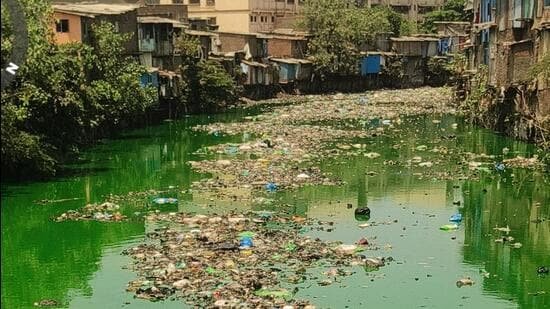
MUMBAI: Ahead of monsoon, concerns over the city’s flood preparedness and other environmental hazards have intensified, especially after green refuse-laden water was seen flowing through the Mankhurd nullah, in the Govandi-Mankhurd belt, recently, prompting intervention by the Maharashtra Pollution Control Board (MPCB).
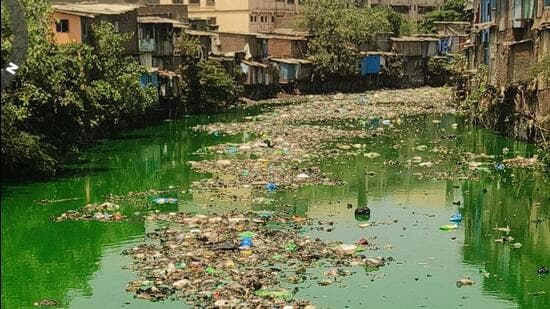
Following a report published by the Hindustan Times on May 19, which highlighted the unusual discolouration of water in the drain, MPCB officials conducted a site inspection and submitted its observations to the assistant commissioner of BMC’s M/East ward.
MPCB’s observations are distilled in two points – that it was a grave matter from the standpoint of environmental protection and public health, calling for an immediate compliance from the civic administration.
In the MPCB report, a copy of which is with HT, authorities noted that
greenish water was seen at multiple points along the Mankhurd drain. Officials also found untreated sewage from adjoining slum pockets flowing directly into the drain. Large quantities of floating garbage, solid waste and accumulated silt were also seen choking the channel, leading to stagnation and restricted water flow.
The inspection further revealed the presence of scrap storage and handling units along the drain, raising concerns about possible discharge of contaminated or coloured effluents into the water body. Officials said the discolouration may have been caused “by a combination of untreated sewage, detergent-laden wastewater, algae growth and coloured liquid substances entering the drain”.
Authorities collected water samples from locations near the Railway Quarters in Mankhurd, Sathe Nagar and near the SMS factory area – all samples showed similar discolouration.
Following the inspection, the MPCB issued a notice to the BMC on May 19 pointing to dumping in drains and recommended urgent corrective measures – these include, identifying and blocking sewage discharge points, removing accumulated garbage and silt, and investigating whether scrap dealers, commercial establishments or unauthorised units were releasing coloured wastewater into the drain.
Authorities also recommended mapping illegal sewage connections in nearby slum areas and installing CCTV cameras at key locations in Mankhurd, Govandi and Shivajinagar to spot people responsible for illegal dumping and wastewater discharge. The report additionally called for protective barriers, warning signboards and regular desilting operations.
Meanwhile, the issue figured prominently during the BMC’s standing committee meeting on Friday, where corporators across party lines sharply criticised the slow pace and allegedly superficial desilting work being carried out across Mumbai ahead of monsoon, especially in Zone V, as reported in HT.
Members warned that unless major drains, outfalls and choke points were cleared immediately, “the city could once again face severe flooding”. Several corporators alleged that contractors were merely removing floating waste while leaving deep silt deposits untouched, defeating the purpose of the annual desilting exercise.
Questions were also raised over the transparency of desilting data, the disposal of extracted sludge and the alleged misuse of GPS-based monitoring systems.
While NCP leader Saeeda Khan said, “insufficient attention is being paid to the Mithi River and key flood-prone locations,” Congress leader Ashraf Azmi claimed, “more than 50% of the desilting work is still pending”. Azmi warned that the city could face flooding if urgent corrective measures were not taken.
Following the discussion, standing committee chairman Prabhakar Shinde announced a site inspection of problematic areas in Zone V on Monday. The visit will cover flood-prone locations including Saki Naka, Mankhurd-Govandi, Deonar, Kurla and Chunabhatti.
