


With the Indian domestic cricket season reaching its climax alongside the ongoing 2026 edition of the Indian Premier League, the focus has now shifted towards national call-ups as players look to reap the rewards of their hard work throughout the 2025–26 campaign.
On May 19, the Indian selection committee announced the Test and ODI squads ahead of a long international season, with several notable omissions and fresh inclusions adding a new dimension to the setup. India will begin their Test season with a one-off match against Afghanistan, as the Shubman Gill-led side looks to build momentum with a refreshed squad ahead of crucial series against New Zealand and Australia later this year.
Several eye-catching changes were made, particularly in the bowling department, with Jasprit Bumrah missing out and 25-year-old Punjab pacer Gurnoor Brar earning a maiden call-up to the national setup.
The selection came after the young pacer enjoyed an impressive 2025–26 Ranji Trophy campaign, helping Punjab reach the semi-finals by claiming 33 wickets in 12 matches, including a remarkable 5/14 spell against Bihar. His domestic performances firmly pushed his name into contention, with Gujarat Titans, led by Gill, retaining him for INR 1.3 crore ahead of the 2026 IPL season. However, he is yet to feature in a game due to GT’s experienced and settled bowling attack.
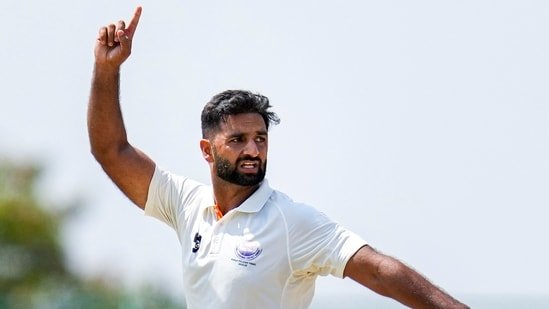
While his credentials justify a maiden India call-up, the omission of Auqib Nabi certainly caught attention, especially after his historic red-ball performances during the same domestic season. His crucial contributions helped the Jammu and Kashmir cricket team script history by winning their maiden Ranji Trophy title in the tournament’s 91st edition.
Former India cricketer and expert commentator Aakash Chopra was left surprised by Nabi’s omission. While acknowledging Brar’s selection, Chopra questioned what more Nabi needed to do to earn a national call-up, at least in the red-ball setup.
He further questioned the basis on which Nabi was overlooked, suggesting that testing his abilities against a side like Afghanistan would have been a better opportunity before potentially exposing him directly to a challenging away tour of New Zealand. Chopra also pointed out that selecting Brar ahead of Nabi purely because of physical attributes such as extra bounce and pace should not outweigh Nabi’s outstanding domestic numbers.
“Gurnoor Brar’s name is there. Gurnoor Brar is a fast bowler, and he also bats a little. He plays for Punjab. He has taken 52 wickets and has bowled close to 400 overs in First-class cricket. So, performance in First-class cricket has been rewarded there, and he has been kept in the team,” Chopra said in a video shared on his YouTube channel.
“However, one thing is that Auqib Nabi isn’t there. No one has taken more wickets than Auqib Nabi in the last little while. So what is the selection committee thinking? Will they play him straightaway against New Zealand? That’s a possibility, or else, are they thinking they need extra pace and bounce, as Auqib probably does not have as much pace and bounce as Gurnoor Brar?” Chopra added.
Chopra’s remarks do carry weight, as Nabi earned every right to receive a national call-up after helping his side achieve a historic domestic feat with 60 wickets across 10 matches, including a decisive spell of 5/54 in the final against the Karnataka cricket team, where he dismissed key batters such as KL Rahul. His performances also earned him the Player of the Tournament award.
While those numbers are astonishing, it is certainly not easy to achieve such a feat at that level, with only two bowlers previously claiming 60-plus wickets in a single Ranji Trophy season. His historic performances also earned him an IPL contract, with Delhi Capitals spending INR 8.40 crore to secure his services. However, he is still adapting to the fast-paced T20 format, having made only four appearances so far and still searching for his maiden IPL wicket.
If Test selection is based on Ranji Trophy performances and red-ball credentials, then Nabi’s omission, despite Brar earning his place, does not appear entirely justified or clearly explained by the selection committee, as highlighted by Chopra.
