Why did you think of writing a memoir about your encounters with the supernatural?
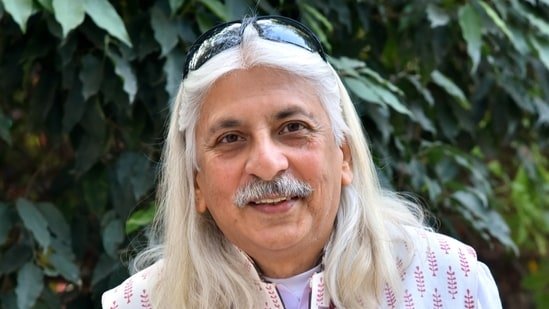
Author Sanjoy K Roy (Jaipur Literature Festival)
A number of publishers kept asking me to write my memoir primarily around the inception of the Jaipur Literature Festival, Teamwork arts, etc. I was like, no, no, I’m not set to write that particular story. Then because there was so much of insistence by these publishers, I asked Himali at A Suitable Agency to please deal with them; I have nothing to say right now. Then she said but why don’t you seriously think of writing something? As we were discussing as to how my memoir would be shaped, I said, well, why don’t I write about my experiences with the supernatural ever since I was five? That really is how this started. The last thing that people thought that I would write about was the supernatural, because while people may experience this, nobody really speaks about it. Surprisingly, now, as the book has gone out in the last few days, everybody who’s been buying it has been sending me messages saying, you know, this is my story. Maybe we’ll follow it with an anthology of stories collected from all of these different people who’ve had experiences, but never articulated it. In fact, a very eminent person called me yesterday and said, you know, I’ve never said this because I thought people will think I’m mad, but this is all that’s always happened with me. So, I suppose it’s a first in terms of giving a platform to these not-quite-explainable-away incidents and stories.
Were you concerned about how the book might be received among sceptics, particularly from the liberal circles of which you are a part?
It’s a lived experience for me. You know, the minute you’re anywhere in the public eye, you are criticized and I’m not immune to criticism, but it is what it is. I myself continue to be a sceptic. It’s not that I believe in everything. I mean, even today, if I get an instinct which says, ‘make a left here because you’ll be stuck in a traffic jam up ahead’, I still go, you know, screw the instinct, let me follow my Google map. And invariably, it turns out that I should have taken the other route. So, you know, you continuously always fight with yourself because we are so trained to be thinking all the time and being rational as opposed to going with our instinct. I think that’s our mental makeup as opposed to following our gut instinct.
Today, science is coming to the fact that it’s really from the gut that everything follows and the messages from the gut to the brain is really the science of the now. So, it’s interesting that we are always having to play this dual role of being logical, but at the same time, your instinct sort of has a place in the scheme of things. More and more, I allow my decisions to be ruled by my instinct as opposed to by my rational thinking, except that I’m always challenging it, but that’s the dichotomy of the time.
Was there any hesitation from your family/friends when it came to publishing these stories?
I didn’t share the writing of the story for quite a while because I kept writing and rewriting it. When it was mostly done, I shared it with Puneeta, my wife, because she’s the healer, you know. I attract dark energies. The legal requirement was that I had to get a sign off from everybody who plays a prominent part in the book, because these are really shared stories. Many of these incidents have not been just me personally. It’s been the family. It’s been the friends. It’s been all of us collectively sharing an experience. Each of us can interpret it differently, but it has been a shared experience in many ways.
You know, the interesting thing is that the process of writing was a process of healing some of these memories. For example, when I was a kid, when I was kidnapped, it’s not a memory that I had. I’d gone to see a production that we had commissioned with the Assembly Rooms in Edinburgh on the Nirbhaya incident. And because it was a telling of each of the actor’s stories, suddenly in the middle of the play, this memory of my being kidnapped as a kid popped up. I’d forgotten all about it. So, in our subconscious, I think we keep all of these scar tissues. In the process of writing, many of these have helped me heal at least the memory of that. Some of these memories are fairly scary, which is the reason one remembers them. The process of writing is really a process of also healing.
There is a Filipino mythological creature called Bangungot or Batibat which is linked to unexplained instances of sudden deaths of young male members while they sleep. This creature is pictured as sitting on the chest of young men as they pass away. I was reminded of it specifically from the ending of the second chapter where you mention a similar ominous presence. Did you come across any such folkloric/supernatural events in the South Asian context in your research for the book that you could retrospectively tie in with your own experiences?
In my research, I was really looking at the Bhoota traditions in Bengal, for example. And then in each of the chapters, for example, in Edinburgh, the Scottish names of the Scottish ghosts or beings. And of course, in Spain. But beyond that, I didn’t do too much. I was more intent on getting the history of the setting right of the places where I encountered something. In the Jerusalem part, I was researching Mishkenot Sha’ananim, the place where I had this experience. Later, it was explained to me that it was Moses who had arrived. It was only when I researched it that I realized that this meant this was a place of Moses. And the well was the place where Moses is supposed to have drunk from. Similarly, when I was researching the University of Valladolid… I realized it was where a group of mendicants were persecuted by the Catholic Church. The particular apparition that I had in Valladolid was one of the most non-frightening ones, you know, because I looked at the person and the person looked at me. Normally I jump out of my skin. It doesn’t matter how often I see an apparition, I still get horrifically frightened. It was only in these one or two instances, Madam Durell in Two Chimneys up in Gethia, and this young lad in Valladolid, who I thought was housekeeping staff because he just sort of hung by this alcove. I thought he had come to make the bed or whatever. It’s only when you start absorbing that you realise haath nahi hai and pair nahi hai (the person doesn’t have hands or feet)… But it was one of the few instances when I wasn’t jumping out of my skin and rushing for the light.
Do plan to share your experiences with the entertainment industry beginning with the inception of TV channels in the 1990s, which you mention in passing in this book, in the form of a full-fledged book?
At some point of time, I’ll do part two of this memoir. There are so many stories waiting to be told. I mean, every festival has a story, every country has a story, every collaboration has a story, every artist has a story, you know, good, bad, ugly, interesting, dramatic. That’s something that I will start working on.
How has your own spiritual journey been shaped through these encounters?
I’ve always been a sceptic, and it’s Puneeta who’s really been the healer. For a long while, one steered clear of it. Today, I meditate every day, but I’m still pretty much of a sceptic. I find it difficult to understand the issue around living gurus or the idea of a god who doesn’t necessarily see when there’s genocide in Gaza or where there is discrimination against minorities in India, you know, all of this kind of stuff. It’s very difficult, but I have a very deep, inbuilt, traditional sense of, say, Durga Puja. I do go to what was my mother’s house temple and light a lamp every morning. I’m happy to suspend my belief, but at the same time, the other side of me still remains very sceptical.
Simar Bhasin is a literary critic and research scholar who lives in Delhi. Her essay ‘A Qissa of Resistance: Desire and Dissent in Selma Dabbagh’s Short Fiction’ was awarded ‘Highly Commended’ by the Wasafiri Essay Prize 2024.