


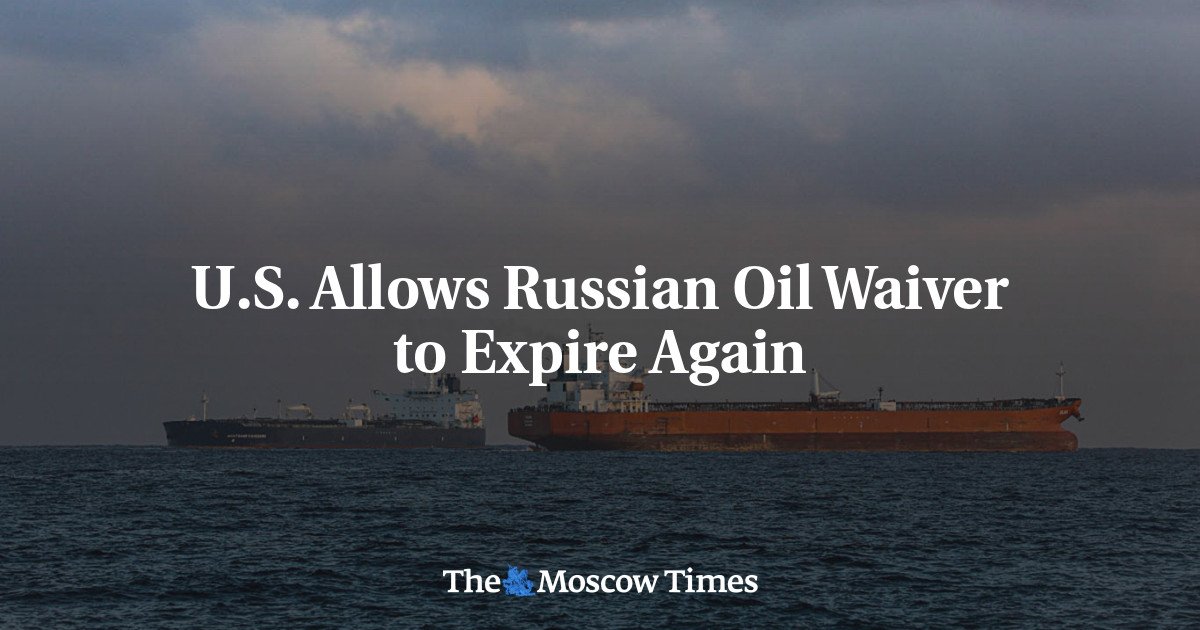
A temporary U.S. sanctions waiver allowing for the sale and delivery of Russian seaborne crude expired this weekend, marking the second time Washington has let the relief measure lapse without clarity on a renewal.
The general license, first issued by the U.S. Treasury Department in mid-March and extended in April, was meant to ease pressure in global energy markets after the U.S.-Israeli war against Iran triggered the largest-ever oil supply disruption.
While some U.S. allies in Europe criticized the measure for providing a financial boon to Moscow, vulnerable economies in Asia lobbied Washington for extensions to combat domestic fuel crises. Last month, the Trump administration extended the waiver until May 16.
Treasury Secretary Scott Bessent said in late April that the Trump administration would not renew the waiver for a second time. The U.S. Treasury Department declined to comment when contacted last week by The Moscow Times about the possibility of another extension.
Sanctions experts told Radio Free Europe/Radio Liberty over the weekend that they expect the Treasury Department to either issue a short-term extension or grant specific exemptions to major Asian refineries, including those in India, which has become heavily reliant on discounted Russian crude.
Russia’s revenue from crude and petroleum shipments continued to grow in April, rising to $19.18 billion, the International Energy Agency said in its monthly report published last week.
The price of Urals crude surged to around $120 per barrel in early April. Before the war in Iran, Russian oil had been sold at wide discounts due to U.S. sanctions over the full-scale invasion of Ukraine.
