


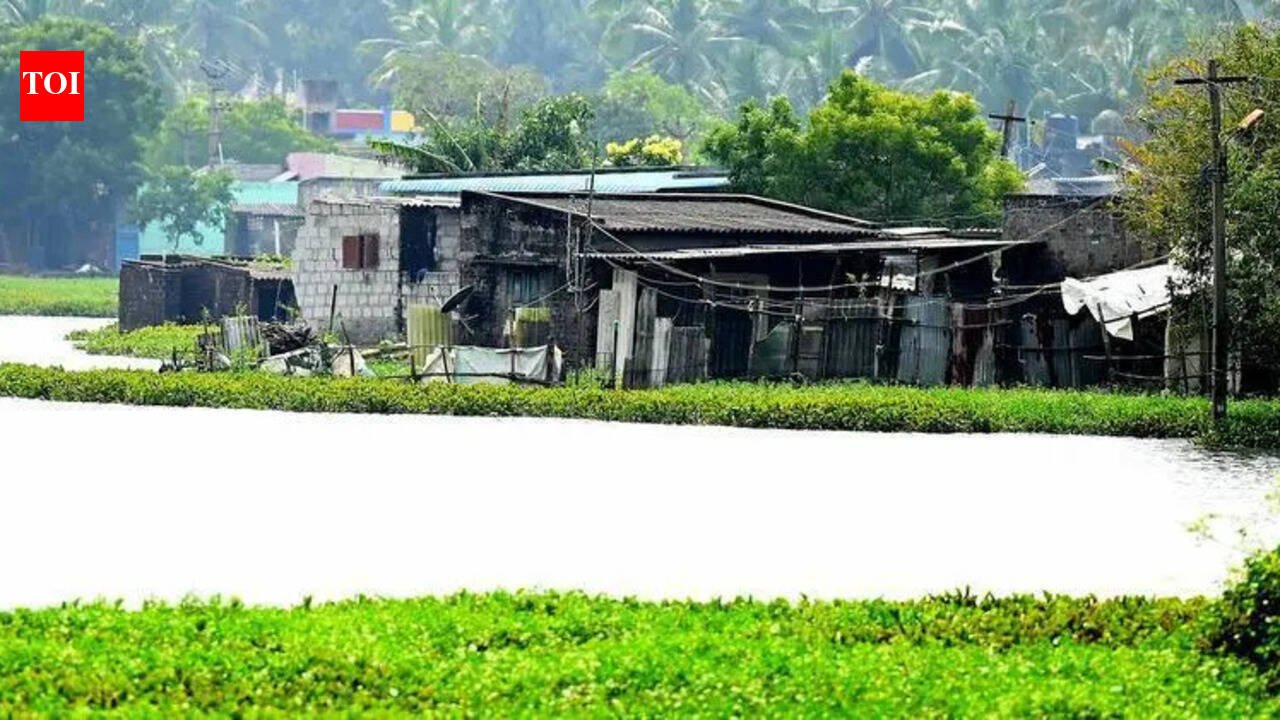
Chennai: City researchers have identified a locally found freshwater microalgae that can ‘eat’ plastic waste in polluted water bodies in three months. A study by the Centre for Advanced Studies in Botany, University of Madras, found that Uronema trentonense, isolated from plastic waste in Rajakilpakkam Lake, can degrade up to 27% of high-density polyethylene (HDPE) and 21% of low-density polyethylene (LDPE), used in common household items like bottles, over a 12-week period under laboratory conditions.“Uronema trentonense showed maximum degradation of HDPE plastics of 27%,” said Nagaraj Subramani, corresponding author. “The integrated approach of biological, chemical and physical mechanisms of the microalgae Uronema trentonense has shown a remarkable degradation, which can be significant in achieving sustainable development goal – 12 (Ensure sustainable consumption and production patterns).”Researchers said the algae attaches to plastic surfaces and form biofilms, triggering chemical and structural changes. This leads to weakening of the plastic’s polymer chains, followed by enzymatic breakdown into smaller fragments. Over time, the plastic surface develops cracks, pits and increased roughness, and the degraded material is converted into simpler compounds such as fatty acid derivatives. The algae uses some of these smaller compounds as a source of carbon for growth, effectively allowing them to ‘eat’ parts of the plastic.The researchers initially isolated around 50 microalgae species from plastic waste in the lake and shortlisted 10 for detailed testing based on their morphology and ability to colonise plastics. These included Stigeoclonium, Uronema, Chlorococcum, Oocystis, Chroococcus, Oscillatoria, Nostoc and Westiellopsis. Among them, Uronema trentonense showed the highest degradation efficiency, followed by Nostoc and Stigeoclonium, which also showed significant but lower degradation. Other species showed moderate to low activity.The research team’s earlier study identified microalgae such as Coccomyxa species capable of degrading plastics by up to 24%. That study examined 222 algae species colonizing plastics across four city water bodies in Velachery, Sholinganallur and Kelambakkam, and a water stream in Kazhipattur and suggested that such native algae could be used in freshwater management and pollution control strategies.Researchers found that some plastics remained relatively resistant across all treatments.”The degradation rate was higher in HDPE and LDPE plastics than that of PET, PP and PVC plastics,” said Antony Prakash Rejoy Patrick, first author of the study.
