


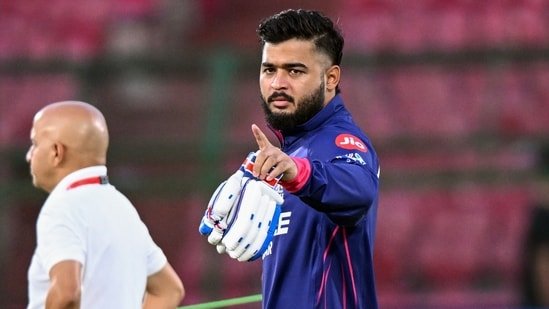
Former India batter Sanjay Manjrekar has weighed in on the vaping controversy involving Rajasthan Royals captain Riyan Parag, calling the youngster a “soft target” amid what he described as excessive scrutiny in modern cricket. While acknowledging that vaping is illegal in India and that the Board of Control for Cricket in India (BCCI) rightly punished Parag, Manjrekar urged authorities to investigate the supplier and take appropriate action.
Speaking to Sportstar, Manjrekar recalled that, in his time, his teammate Krishnamachari Srikkanth would smoke in the dressing room to unwind during tough match situations, but admitted that times have changed, with broadcast cameras becoming too “intrusive” and denying players the privacy they once had.
“In our time, there was a player called Krishnamachari Srikkanth. He loved smoking. It was a way to unwind—you got out, felt frustrated, and had a smoke. Shane Warne used to do that as well. But back then, cameras weren’t this intrusive. Today, with the kind of coverage we have, even a silhouette of someone like Mahendra Singh Dhoni somewhere private can be picked up and shown. There is virtually no privacy for players anymore,” he said.
According to a PTI report that emerged in the wake of the vaping incident, IPL captains had complained to the BCCI and league officials about the lack of privacy in dressing rooms. However, the concern wasn’t limited to e-cigarettes but extended to broader privacy issues, which the board may now review in light of the controversy surrounding Parag.
Manjrekar stressed the need to move on quickly, arguing that intense, microscopic coverage today often amplifies relatively minor incidents involving young players.
“That’s something I’m strongly against—stump mics, too. That used to be our space on the field. You might whisper something near the stumps, knowing it wouldn’t go beyond that moment. But the game has changed. The scrutiny is far greater now.”
Parag was caught vaping during an IPL 2026 match against Punjab Kings in Mullanpur over a week ago. The act triggered an immediate reaction on social media, especially with the Indian government banning e-cigarettes in 2019, prohibiting their production, sale and distribution. Under the law, an offender faces imprisonment of up to one year and/or a fine of ₹1 lakh for a first-time offence.
“When I saw the vaping incident, my first thought was that it’s quite close to smoking, so what’s the big deal? But then I realised vaping is actually illegal. I believe a law was passed in 2019 banning it. So what he did was against the law. Supplying e-cigarettes is also illegal. So yes, action must be taken—but not just against Parag. Authorities should also find the supplier and act accordingly,” Manjrekar added.
Parag was fined 25 per cent of his match fee and handed a demerit point for breaching the tournament’s code of conduct, relating to “conduct that brings the game into disrepute”.
Manjrekar urged people to move on from the incident and not be overly harsh on Parag, while also clarifying that modern-day players are not less respectful towards the game—it is the nature of coverage that has changed.
“Having said that, we need to move on quickly. There have been far more serious violations of the spirit and laws of the game in the past. In that sense, Parag becomes a soft target, and we shouldn’t be too harsh on him just because of who he is.
“At the same time, players must behave responsibly. At 20, with that kind of personality and attention, it can be difficult. But there’s also a misconception that modern-day players don’t uphold the values of the ‘gentleman’s game’. Some incidents in the past were far worse—things we no longer see.
“We’ve had a bowler deliberately run into an umpire out of frustration. We’ve seen players kick stumps in anger. We’ve even witnessed physical altercations during international Test matches. None of that has happened in the last 15–20 years.
“What’s changed is the coverage. Everything is under a microscope now. Even an innocent stray comment can be picked up, misinterpreted, and penalised. It’s a tough space to be in—there’s just too much scrutiny, even on the field.”
