


A leading human rights barrister is facing contempt of court proceedings after he was accused of defying a judge’s orders during a trial of Palestine Action activists.
Rajiv Menon KC is accused of breaching the judge’s directions while giving his closing speech in the trial of six people in relation to a 2024 direct action protest at an arms factory of the Israeli subsidiary Elbit Systems UK in Filton, near Bristol.
None of the defendants were convicted of any offence after the first trial, which concluded in January, but they were retried. After the second jury’s verdicts on Tuesday, the proceedings against Menon, who represented Charlotte Head in both trials, can be reported.
Menon previously worked on the Stephen Lawrence inquiry, the inquests of victims of the Hillsborough disaster and the Grenfell Tower inquiry.
The proceedings are believed to be the first brought against a barrister in respect of a jury speech in living memory, possibly ever.
A decision by the court of appeal on whether they should go ahead is pending after lawyers for Menon challenged the case against him.
Before the first trial, Mr Justice Johnson ruled that Head and her co-defendants, who were then charged with violent disorder, aggravated burglary and criminal damage, could not argue they had a “lawful excuse” because of the actions of the Israeli military in Gaza.
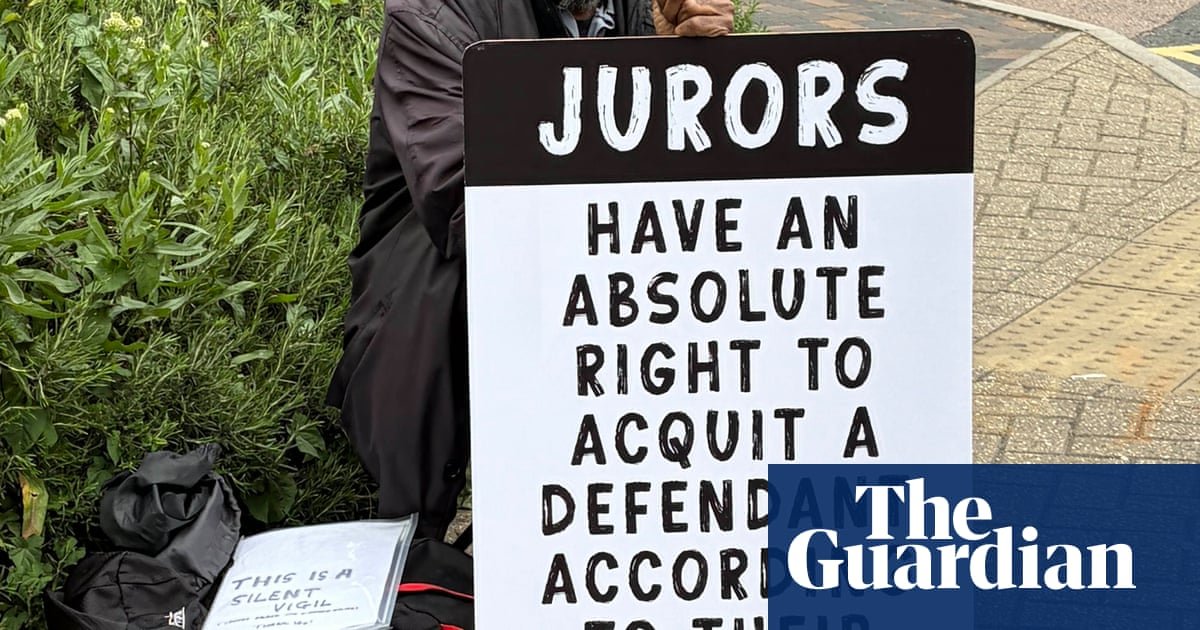
He later directed that the lawyers were not permitted in their closing speeches to invite the jury to disregard the court’s rulings of law. Johnson also forbade them from inviting the jury to apply the principle of jury equity – the right of a jury to acquit on the basis of conscience regardless of the judge’s directions – or to inform the jury of it.
During his closing speech, Menon highlighted Bushell’s case from 1670 which is recognised as having established beyond question the independence of the jury. He also read out the inscription of a plaque at the Old Bailey commemorating the case, which states that it “established the right of juries to give their verdict according to their convictions”.
The barrister additionally said on six occasions that the trial judge could not direct the jury to convict the defendants.
Johnson said: “The effect of Mr Menon’s speech was to invite the jury to disregard my directions that they should put views of the Middle East and the war in Gaza, and emotion, to one side.”
At the retrial, Head and four of her co-defendants dispensed with the services of their barristers just before closing speeches, and delivered the addresses themselves to the jury. Head said it was because “after some decisions made by the court, I no longer feel like they are permitted to represent me in a way that does us all justice”.
However, after Head and three others were convicted of criminal damage, Menon was reengaged and represented her and one of her co-defendants in an unsuccessful attempt to be bailed ahead of sentencing.
