


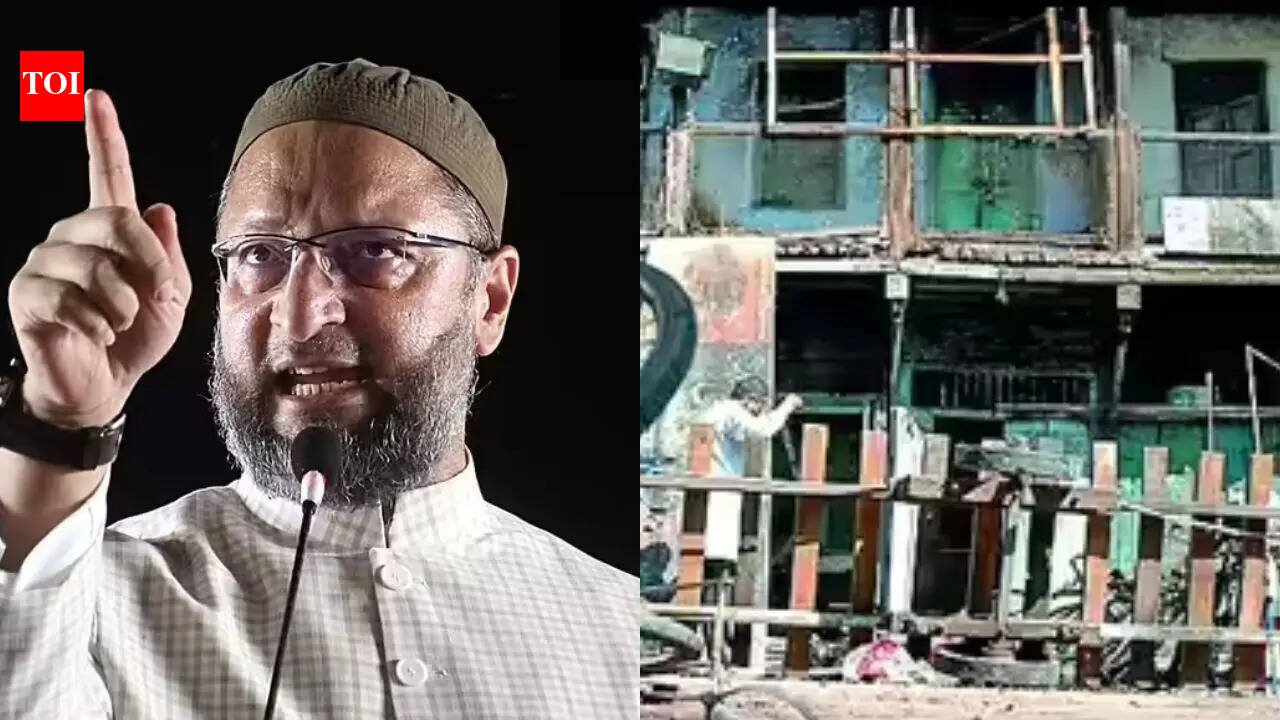
HYDERABAD: Asaduddin Owaisi, chief of the All India Majlis-e-Ittehadul Muslimeen (AIMIM), has criticised the Bombay High Court’s decision to discharge four men accused in the 2006 Malegaon blasts case, calling it a “betrayal” of the victims and questioning the probe conducted by the National Investigation Agency (NIA).He said the blasts, which killed 31 people and injured 312, targeted Muslims and raised concerns about the direction of the investigation. “The accused all allegedly belonged to Abhinav Bharat. The explosions claimed 31 lives and injured 312. The blasts specifically targeted Muslims. Yet, maybe out of habit, the investigation agencies first arrested nine Muslims, who were eventually acquitted in 2016. In yesterday’s order, the High Court criticised the NIA for its botched investigation,” Owaisi said in a post on X.
He further questioned whether the NIA would challenge the verdict. “Is the NIA going to appeal the order before the Supreme Court? Highly unlikely. This is a betrayal of all the victims and their families. This will be yet another terror attack where we will not even see its perpetrators being punished. To be a Muslim in India is to only wait for justice,” he added.Owaisi also cited earlier terror cases, alleging a recurring pattern in the way investigations have been conducted. “This case has followed a similar trajectory to the 2008 blasts case. Rohini Salian, NIA’s prosecutor, was on record saying that NIA asked her to go soft on the accused,” he further wrote.Family members of victims of the 2008 Malegaon blast had moved the Bombay High Court on September 9, 2025, challenging the special National Investigation Agency (NIA) court’s verdict that acquitted all the accused, including Pragya Singh Thakur and Prasad Purohit.The blast, which took place on September 29, 2008, near a mosque in Malegaon town of Nashik district, Maharashtra, killed six people and injured 101 others. The High Court had listed the matter for hearing on September 9, 2025, before a division bench comprising Justice A.S. Chandurkar and Justice RR Bhosale. The appeal, filed by six family members of the deceased victims, claims that the special court’s judgment was flawed and seeks to overturn the acquittal. They argued that the investigation was faulty and that the prosecution’s case was weakened by the NIA’s handling of the probe. The special court’s conclusion that there was no cogent evidence to warrant a conviction is disputed by the victims’ families, who argue that conspiracy cases often rely on circumstantial evidence.The victims’ families also raised concerns about the National Investigation Agency’s special public prosecutor, alleging pressure to slow down proceedings against the accused. In their appeal, they claimed the investigation had been compromised and that crucial evidence was either ignored or mishandled.Representing the families of six deceased victims, the petitioners urged the court to issue notices to all respondents, including those acquitted. Meanwhile, the NIA, which prosecuted the case, had not yet filed an appeal.The 2008 Malegaon blast case was handed over to the National Investigation Agency (NIA) in 2011 from the Maharashtra Anti-Terrorism Squad (ATS). After a 17-year-long trial and the examination of hundreds of witnesses, a special NIA court acquitted all seven accused of charges under the Unlawful Activities (Prevention) Act, the Arms Act, and other provisions. The court had examined 323 prosecution witnesses and eight defence witnesses before pronouncing the verdict. Seven people had been acquitted of all charges under the Unlawful Activities (Prevention) Act, Arms Act and other charges. “Prosecution proved that a blast occurred in Malegaon but failed to prove that the bomb was placed in that motorcycle,” Judge Abhay Lohati said. The court also mentioned that there was some manipulation of medical certificates. The court concluded that the injured people were not 101 but 95 only, and there was manipulation in some medical certificates. The court also said there is no evidence of storing or assembling explosives in Prasad Purohit’s residence, who was another accused in the case. “No search of the spot was done by the investigating officer while doing the panchnama. No fingerprint, dump data or anything was collected from the spot. The samples were contaminated, so reports can’t be conclusive and relied upon,” the court said. On the alleged role in the Abhinav Bharat organisation, the court said there was no evidence of the funds of the organisation being used for terror activities. (With inputs from ANI)
