


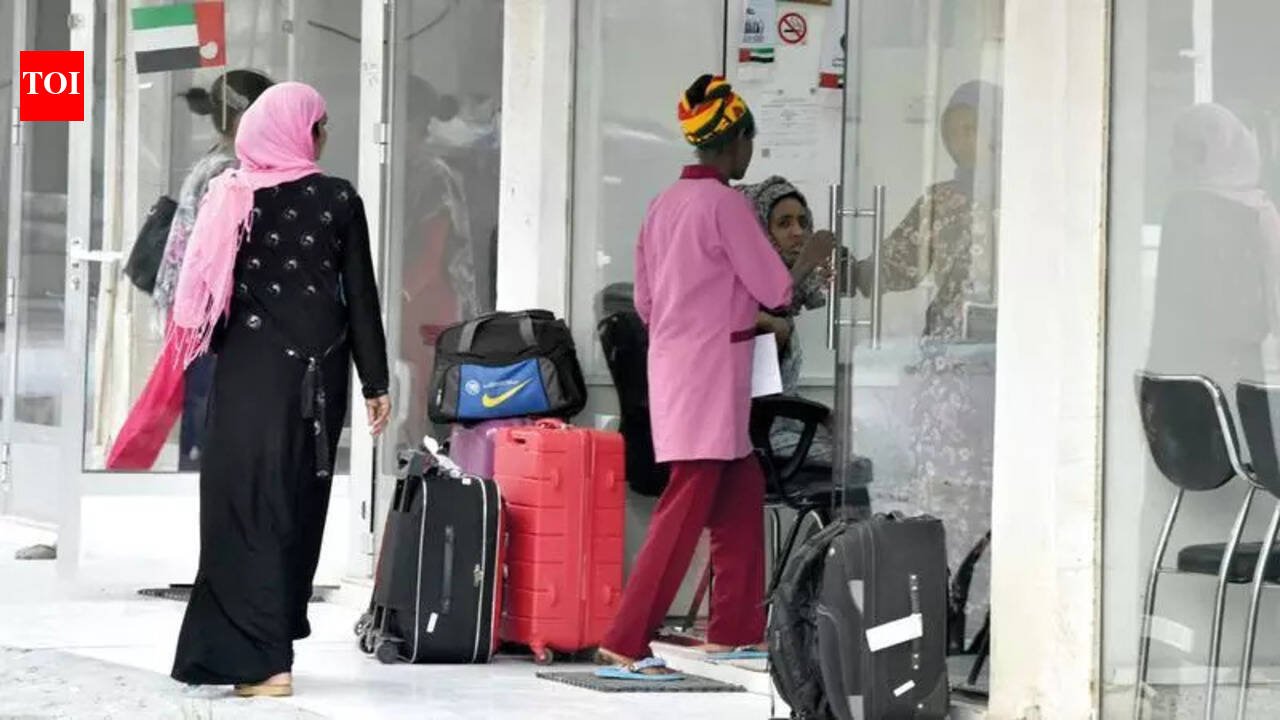
Hyderabad: For many women who left Telangana in search of livelihoods in the Gulf, migration meant sacrifice, savings and survival. But returning home has often brought a different struggle — unemployment, social stigma and limited institutional support.A recent study titled ‘International Returnee Migrants in Telangana–Survey’ captures this reality in stark detail. Conducted for the International Organisation for Migration (IOM) by experts from the Centre for Economic and Social Studies (CESS), including director E Revathi and associate professor Y Sreenivasulu along with research consultant Bharath Bhushan Mamidi, the survey examines the lives of women who returned to the state after working abroad. The findings show that most female returnees were from minority communities in Hyderabad and were largely in the 30-40 age group. They had migrated to Gulf Cooperation Council (GCC) countries such as Saudi Arabia, the United Arab Emirates and Qatar, typically for less than five years. Rs 20k a month sent homeMany were employed as domestic workers or beauticians. While most earned below Rs 20,000 a month, a few reported incomes between Rs 50,000 and Rs 1 lakh. On average, they were able to remit about Rs 20,000 per month to support their families. A substantial share of these earnings went towards their children’s education and household needs. However, on returning to Telangana, nearly 62% of these women found themselves unemployed. The study highlights the barriers they face in re-entering the local labour market. Irregular work opportunities, a shortage of suitable jobs and limited access to information about employment prospects have constrained their options. Many also reported inadequate skills aligned with domestic market requirements.Reintegration proves toughSocial factors further complicated their reintegration. The survey points to stigma attached to women migrating for work, particularly in rural districts such as Jagtial and Nizamabad. In several cases, limited family support made both migration and reintegration more difficult. The report also underscores a glaring gap in skill development and reintegration programmes. Although some women acquired skills abroad, there is little structured support or retraining available upon their return. The study calls for stronger policy interventions, including dedicated skill training facilities and enhanced institutional mechanisms, to enable the returnees rebuild livelihoods and reintegrate into the local economy with dignity.
