


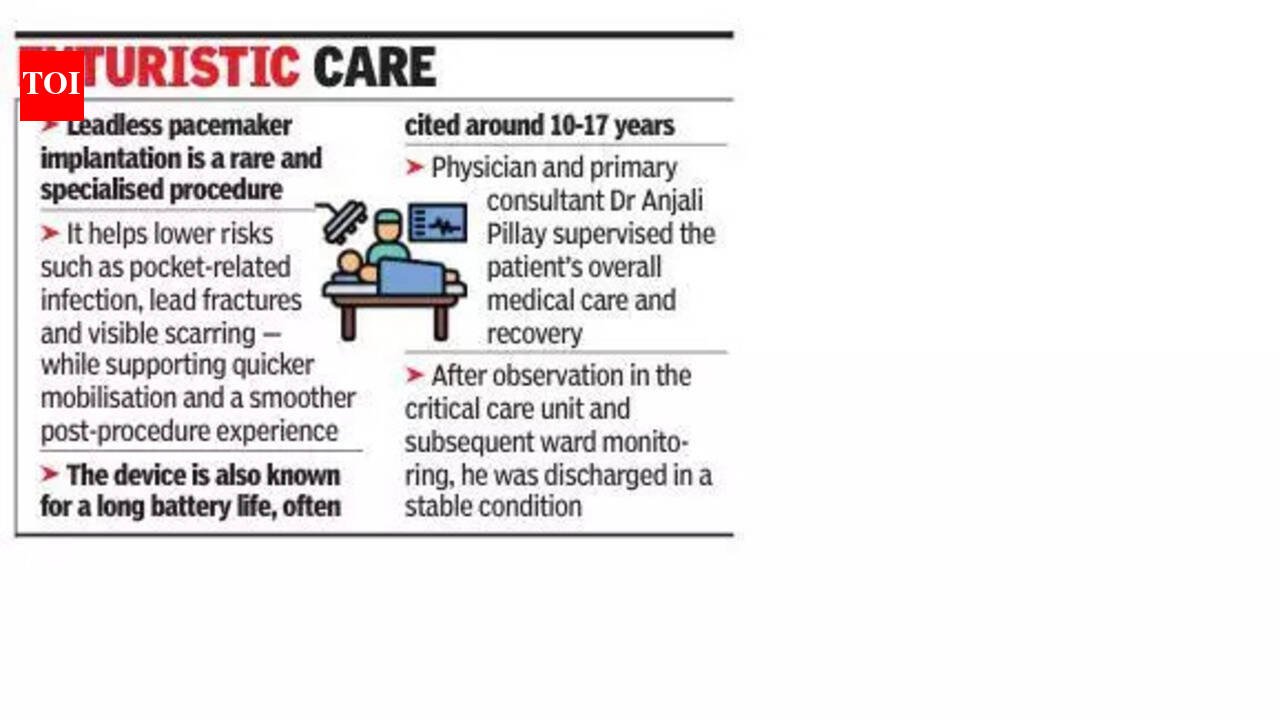
Pune: A leadless capsule pacemaker — a wireless device — was successfully implanted in a 61-year-old man’s heart with complete blockage through a minimally invasive catheter-based procedure, with the patient being discharged within three days of the process.In the said case, the heart’s electrical signals were interrupted, causing a dangerously slow heart rate. The surgery at a city-based hospital was a success despite the patient’s age and comorbidity, with the recovery being much faster than that of conventional procedures.The patient had diabetes and hypertension. He was admitted to Inamdar Hospital on Feb 15, with complaints of giddiness and discomfort. On evaluation, doctors immediately implanted a temporary pacemaker to stabilise his condition. Once the patient was out of danger, the team carried out a detailed assessment to rule out reversible causes. Coronary arteries examination showed no physical blockage, confirming that the electrical system of the heart was faultySenior interventional cardiologist of Inamdar Hospital Dr Hasmukh Gujar said, “In a complete heart blockage, timely intervention can be life-saving. In this case, a leadless pacemaker offered us an effective and patient-friendly option. Since the device is implanted directly into the heart without the traditional leads and chest pocket, it helps reduce certain procedure-related complications. It also offers faster recovery, shorter hospital stay and long battery life — making it an important option for carefully selected patients. The patient’s relatives consented after we held a detailed counselling regarding available options.”Leadless pacemaker implantation is a rare and specialised procedure. It helps lower risks such as pocket-related infection, lead fractures and visible scarring — while supporting quicker mobilisation and a smoother post-procedure experience. The device is also known for a long battery life, often cited around 10-17 years, added doctors.Physician and primary consultant Dr Anjali Pillay supervised the patient’s overall medical care and recovery. She said, “The patient’s heart rate stabilised, his symptoms resolved and he showed steady clinical improvement following the implantation. After observation in the critical care unit and subsequent ward monitoring, he was discharged in a stable condition.”
