


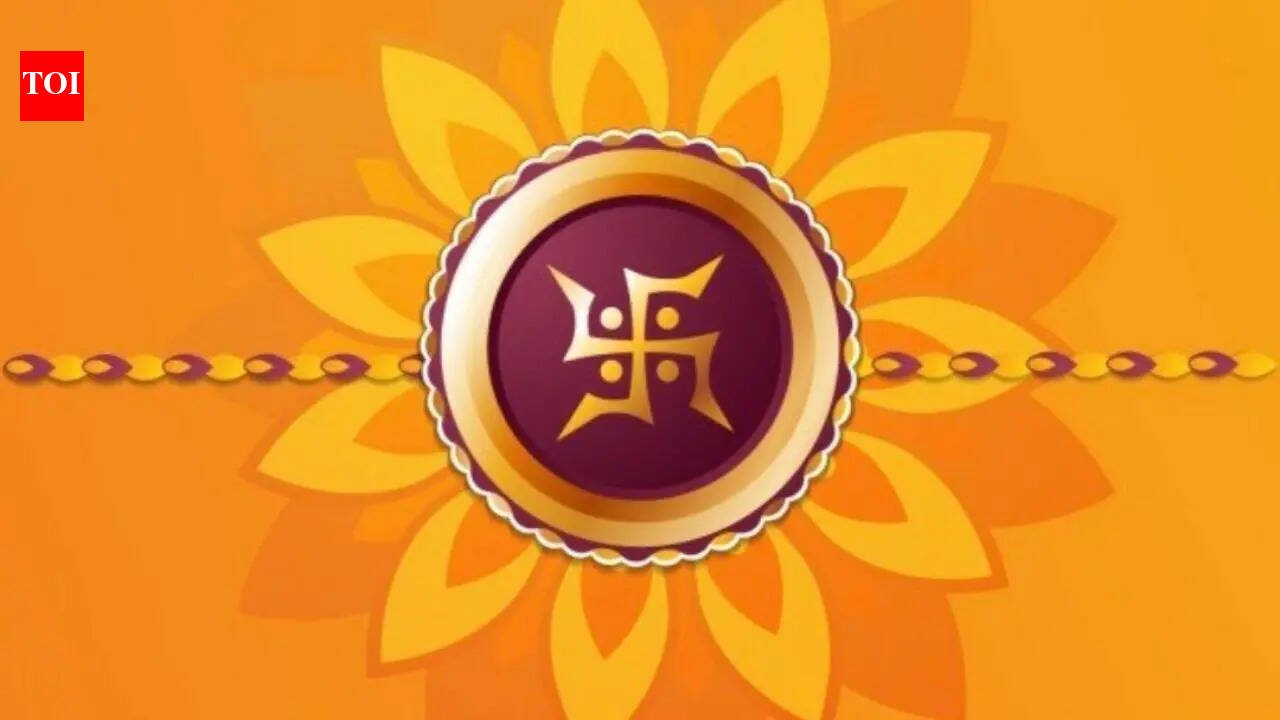
In Hinduism, symbols play an important role and carry a deep spiritual significance. There are symbols in every religion in the world. Some are used for religion, some are sacred, and some indicate historical significance. From Shankh, Shree Yantra to Om, they all carry a powerful divine energy and people keep it in their puja ghar or home temples for spiritual growth, protection, prosperity and positivity. These are the powerful tools to spread positive energy. The most amazing thing about Hindu symbols is that they have spiritual and scientific significance in addition to being utilized in prayers. In this article, we will talk about six powerful symbols that can bring positivity into your home and change the entire energy of the house.
6 Powerful symbols in Hindu religion:
Swastika:
In Hinduism, Swastika is considered a revered and fortunate symbol. This is a an extremely fortunate symbol. Swastika has been used from centuries. The four direction of the swastika are bent at a 90-degree angle to produce an equilateral cross. It is a revered emblem in Buddhism, Jainism, and Hinduism. Swastika represents the four seasons, wealth, good fortune, prosperity, balance, harmony, the energy of the sun, eternity, and the cyclical aspect of the universe.
Om or Aum:
One of the most significant spiritual symbols in Hinduism is Om, also known as Aum. According to Hinduism, Aum is the primordial sound and root mantra from which all creatures originate. It also alludes to Brahman (ultimate reality) and Atman (soul or the self within). In India, om is also referred to as the “cosmic sound,” “mystical syllable,” or “vibration to something divine.”
Trishula:
The trident of Lord Shiva symbolizes Trinity (Lord Brahma, Lord Vishnu, and Lord Mahesh). Creation, maintenance, and destruction are the three modes of nature. This also represents the past, present, and future—the three Kala, the three types of miseries (physical, mental, and spiritual), the three Gunas (Sattva, Rajas, and Tamas), and the three Powers (will, action, and wisdom).
Ghanta or Bell:
The bell is utilized in every household while performing puja. The bell produces a high-pitched sound. The ringing of the bell calls forth the gods. When entering a Hindu temple, devotees typically ring a single metal bell that is hung at the entrance. The bell used in ritual puja, which stimulates all senses. Its ringing calls forth the gods, awakens the inner ear, and serves as a reminder that, like music, the universe is perceived but not possessed.
Shankha or Conch:
Shankha, often known as the Conch, is a revered Hindu symbol connected to Lord Vishnu. Hindu scriptures claim that the Shankha bestows wealth, fame, and longevity. Shankanad was the name of the sound that Shankha created. In Hindu households and temples, Shankha is blown during worship. When the light is offered to the gods during Aarti, it is also blown.
Shree Yantra:
For generations, people have utilized Sri yantra, an age-old spiritual symbol, as a tool for introspection and meditation. It is seen as a bridge between the divine and the human. Sri Yantra is a powerful geometric symbol representing the union of divine masculine and feminine energies. It is believed to attract wealth, harmony, and spiritual growth.
