


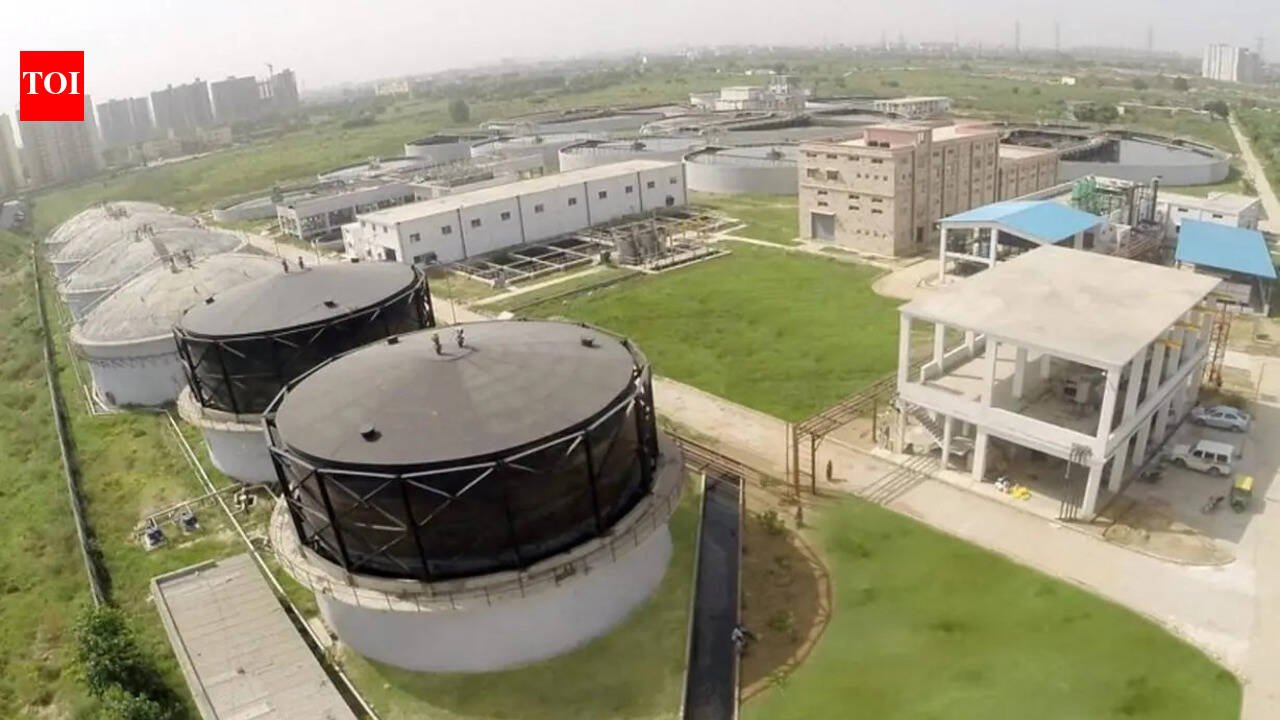
Gurgaon: Construction of a proposed sewage treatment plant (STP) and main pumping station in Behrampur has hit a hurdle.Having failed to finalise bids six months after floating the tender, GMDA has now re-invited bids for the Rs 191-crore project.The project is aimed at strengthening sewage treatment capacity in new sectors along Southern Peripheral Road (SPR), where rapid urbanisation is expected to significantly increase wastewater generation.Sanctioned in June 2022, the tender for the project was only invited in Oct last year. However, it was cancelled last month, citing administrative reasons. Officials said the move was necessitated by revisions in norms issued by the public health engineering department (PHED), which had to be incorporated into the bid document.“There was a revision. Accordingly, the tender was cancelled and has now been re-invited. It is scheduled to be opened on April 28,” a GMDA official said.Under this, GMDA will undertake the construction of a 400 million litres per day (MLD) main pumping station (MPS) and an additional 100 MLD STP at Behrampur. The facility is intended to augment the existing treatment capacity as sewage inflow continues to rise with expanding residential and commercial development.Around 23km of master sewer lines in sectors 58 to 67 have been laid by HSVP, while the remaining network between sectors 58 and 76 is being taken up by GMDA. Once these lines are fully connected, a substantial increase in sewage flow to the Behrampur plant is expected, necessitating the additional 100 MLD treatment capacity, the official said.The project also includes a power generation unit that will utilise biogas produced during the treatment process, helping offset operational costs. Officials said the entire project is expected to be completed within two years once the project is allotted.At present, the Behrampur sewage treatment facility has a capacity of 170 MLD. However, only about 30% of the treated water meets tertiary treatment standards. To address this gap, GMDA is simultaneously upgrading its existing 120 MLD plant to the tertiary level. Once the upgrade is completed, the biological oxygen demand (BOD) in treated water will be reduced from 30 mg/litre to 10 mg/litre, making it suitable for reuse in agriculture, construction and groundwater recharge.
