


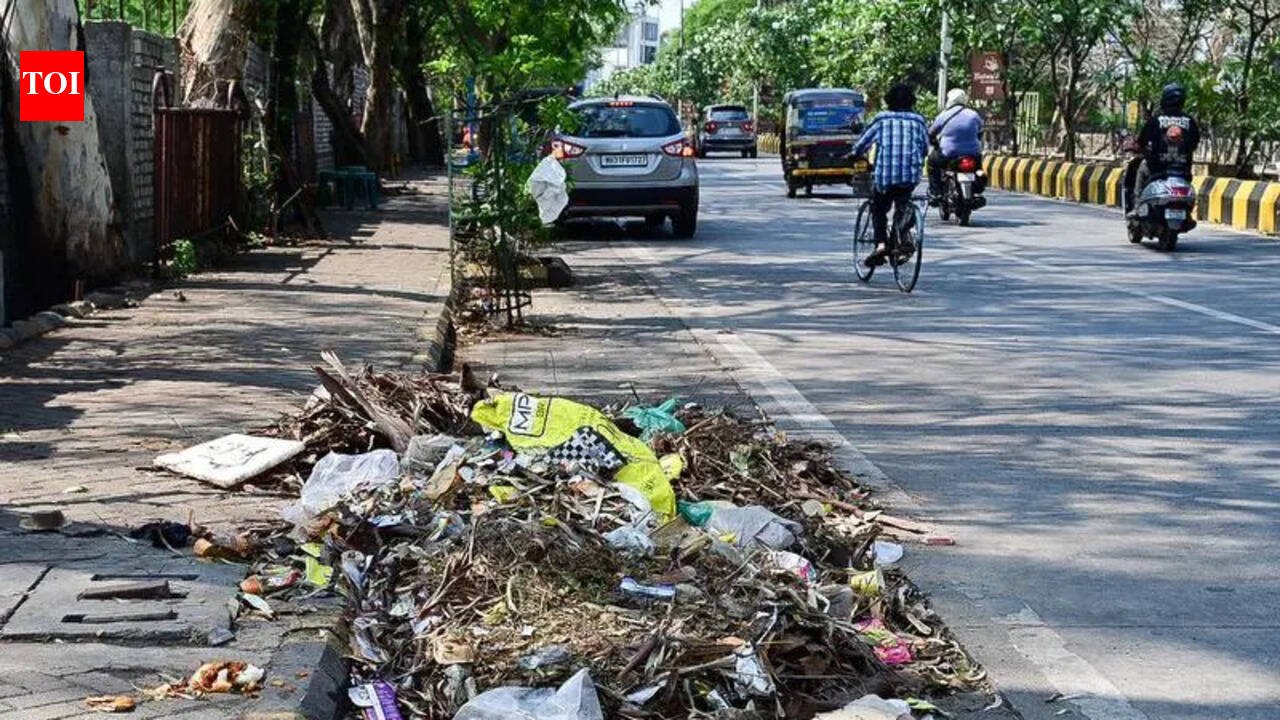
Nagpur: As the Swachh Survekshan 2025-26 looms, Nagpur Municipal Corporation’s claims of improved sanitation are set for a reality check, with over 400 garbage vulnerable points (GVPs) and polluted water bodies exposing glaring gaps in the city’s cleanliness framework.Despite projecting a strong 2024 report card — including 100% score in residential areas, markets and water bodies — ground conditions tell a different story. Garbage dumps continue to resurface across the city, raising serious questions over the effectiveness of door-to-door collection, which NMC claims has achieved near-total coverage.The civic body’s biggest challenge remains achieving the coveted Garbage-Free City (GFC) rating, where Nagpur has historically underperformed. From no star rating between 2020 and 2023 to just 1-star in 2024, the city continues to lag behind top-performing million-plus cities.Even more concerning is the state of major lakes, including Ambazari, Futala, Naik and Lendi, which remain visibly polluted despite official claims of 100% cleanliness. Citizens’ complaints of garbage accumulation, algae growth and poor maintenance point to a casual and inconsistent approach towards water body management — a parameter that carries significant weight in the survey.On the technical front, NMC’s push to increase waste processing from 60% to over 90% and segregation from 60% to 85% remains ambitious, but uncertain. While infrastructure such as waster-to-energy Bhumi Green plant has boosted capacity, the real test lies in actual utilisation and daily compliance — areas where many cities falter during central audits.Legacy waste remediation, currently at 81%, and public toilet maintenance, at 80%, also remain weak spots that need urgent attention to meet the >90% and >95% targets, respectively.Civic officials claim extensive monitoring, GPS-tracked vehicles and app-based systems are in place. However, the persistence of garbage hotspots and poor segregation at source indicates a disconnect between data and ground reality.Experts say NMC must now adopt a targeted, data-driven strategy, analysing performance of top 10 cities across each parameter and focusing on “low-hanging improvements” that can quickly boost scores. “Incremental gains in segregation, visible elimination of GVPs and sustained cleanliness of lakes can significantly impact rankings,” said a senior official.Nagpur’s national rank has slipped from 18 in 2020 to 27 in 2022 and 2023, before a modest recovery to 22 in 2024 — a trajectory that underscores inconsistent performance.With the survey shifting focus from optics to outcomes, NMC can no longer rely on surface-level cleanliness. The coming weeks will determine whether the city can bridge its systemic gaps — or once again fall short in India’s biggest urban cleanliness audit.INFOBOX: NMC & SWACHH SURVEKSHAN — KEY NUMBERSCategory: Million Plus Cities (>10 lakh population)NMC Rankings (National):2020: 182021: 232022: 272023: 272024: 22 AGarbage-Free City Status:2020-2023: No Star2024: 1 StarODF / Water Status:2020-2022: ODF++2023-2024: Water+KEY CHALLENGES (2025-26):Over 400 garbage vulnerable points (GVPs)Poor condition of major lakes (Ambazari, Futala, Naik, Lendi)Weak source segregation at household levelGap between waste generation and processingPERFORMANCE VS TARGETS:* Legacy Waste Remediation:81% → Target: >90%(10.5 lakh MT cleared; 4.8 lakh MT in progress)* Source Segregation:60% → Target: >85%* Waste Processing:60% → Target: >90%* Door-to-Door Collection:90% → Target: >95%* Public Toilets Cleanliness:80% → Target: >95%INFRA & OPERATIONS:469 primary collection vehicles100 support vehicles16 smart toilets operational92 toilets under app-based monitoring*Processing capacity:Waste-to-Compost: 1,000 TPDMRF: 750 TPDC&D Waste: 150 TPDWHAT NMC MUST FIX:* Eliminate GVPs completely* Improve segregation at source* Ensure actual waste processing matches capacity* Maintain lakes and water bodies year-round* Focus on high-scoring parameters from top 10 cities
