


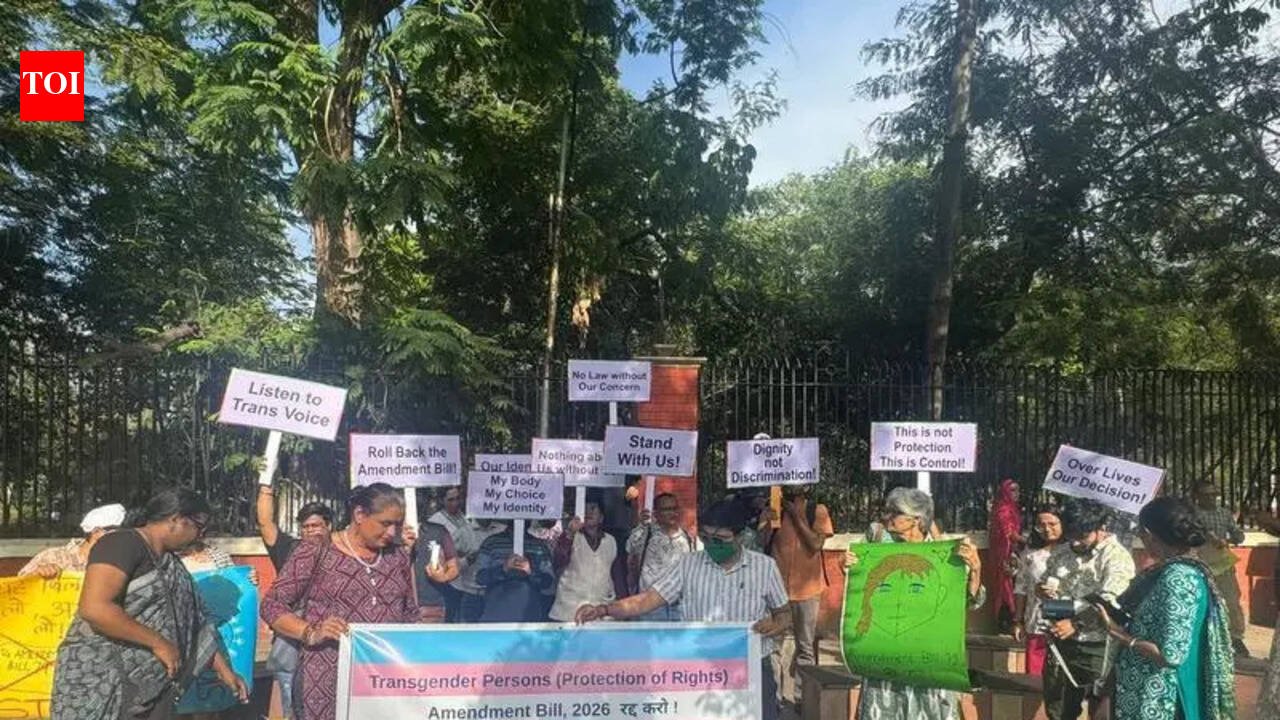
Vadodara: After breaking a 116-year-old institutional barrier at SNDT Women’s University through a hard-fought legal battle, a 32-year-old trans man from Gujarat finds himself in fresh uncertainty, as the Lok Sabha passed the Transgender Amendment Bill, 2026, on Tuesday. The victory now feels bittersweet.In a landmark ruling on Feb 27, 2026, the Bombay high court directed SNDT Women’s University to amend his academic records — mark sheets and degrees — to reflect his changed name and gender, making it clear that procedural rules cannot override fundamental rights. The court observed that the primary objective of an educational institution is to impart education, not deny identity.The petitioner, Vivaan (name changed), who was female at birth, completed his BCom and MCom from an SNDT-affiliated college in Gujarat before undergoing gender-affirming surgery in 2024 after years of financial struggle. He also began hormone replacement therapy and transitioned socially and legally, securing a transgender identity card issued under the Centre’s social justice framework based on self-declaration, and updating documents such as Aadhaar and PAN.However, his academic certificates from the university remained unchanged, triggering a prolonged and emotionally draining struggle.Despite provisions under the Transgender Persons (Protection of Rights) Act, 2019, the university initially refused to update his records, citing its status as a women’s institution. Repeated representations, emails and even a visit to the university’s Mumbai office in Jan 2025 failed to resolve the issue.“They made us go from one office to another. No one was willing to help,” he recalled.With support from organizations such as Vikalp, Humsafar Trust and SAATHII, Vivaan moved the Bombay high court in July 2025. What followed were months of adjournments.“The waiting period was the worst — date after date. It affects everything — your job, your income, your life,” he said.The mismatch in documents had direct consequences. “Because my documents weren’t updated, I couldn’t change my job. It was an embarrassing situation — I had to keep explaining myself everywhere,” he added.Currently employed with an MNC, Vivaan said his workplace was supportive, but limited pay and the inability to switch jobs due to document discrepancies added to his stress. Now, with all documents aligned to his male identity and name, he is finally planning a career move.After the court’s order, the university issued corrected mark sheets on March 16, 2026, with degree certificates expected shortly, bringing to a close a battle that activists say could set a precedent for transgender persons facing similar barriers, particularly in gender-specific institutions.“Once my documents were corrected, everything became clear. I didn’t have to justify myself anymore,” he said.But even as his life began to stabilize — professionally and personally, having recently married — fresh uncertainty has emerged.The Transgender Amendment Bill, 2026, passed by the Lok Sabha on Tuesday, has raised concerns within the community over provisions that could introduce stricter certification processes and medical scrutiny, and ambiguities around recognition of trans men, trans women and intersex persons.“I had just started feeling that everything is finally in place — and then this bill came as a shock,” Vivaan said. “It feels like after all this struggle, our identity itself is being questioned again.”He fears the changes could dilute the recognition he fought for. “We know who we are. Taking away self-identity is taking away our dignity,” he said, adding that increasing procedural barriers in an already complex system could worsen exclusion.Support organizations that backed his case echoed similar concerns, warning that additional regulatory layers could undo years of progress and make access to basic rights even more difficult.For Vivaan, the victory now feels bittersweet.“After winning, I should be celebrating,” he said. “But instead, I’m wondering what comes next.”
