


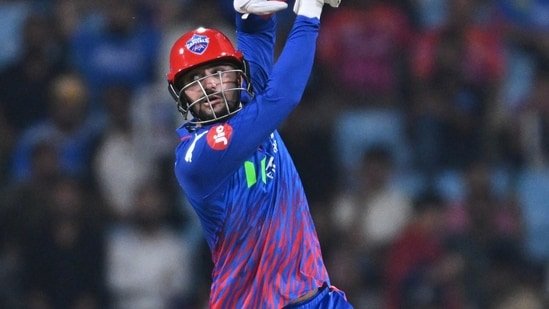
Delhi Capitals did not spend big on Sameer Rizvi. They bought him for ₹95 lakh in the IPL 2025 mega auction. On Wednesday night in Lucknow, he played an innings that looked nothing like a ₹95 lakh insurance policy and everything like a premium rescue act. Delhi were chasing 142 and were reeling at 26/4, but still won by six wickets with 17 balls left. Rizvi finished unbeaten on 70 off 47, was named Player of the Match, and turned what should have been a grind into a chasing masterclass.
This was not a decorative fifty in a chase already under control. Rizvi and Tristan Stubbs added an unbeaten 119 after the collapse, with Rizvi contributing the larger share of the stand and the finishing blow. The knock deserves to be read not just as runs on a scorecard, but as one of those nights when a franchise gets a far bigger return than the salary band would normally promise.
How the valuation works
To reach a fixed number, the match has to be priced through a model rather than vague praise. Sameer Rizvi’s season price is ₹95 lakh, which gives him a flat league-stage per-match cost of about ₹6.79 lakh across 14 matches. The benchmark one-match value for a meaningful playing role was then derived from the IPL’s ₹120 crore auction purse rule, spread across a standard 25-man squad and 14 league matches, yielding a reference one-match slot value of ₹34.29 lakh.
From there, his innings was assigned an impact share using four components: his share of the target, his share of the decisive partnership, the pressure of entering after a top-order collapse, and the fact that he remained unbeaten to finish the chase. Because Delhi were 26/4, a fixed crisis multiplier was applied. That produces a one-match performance value of ₹29.57 lakh. Subtract his per-match salary cost of ₹6.79 lakh, and the profit-value Delhi extracted from Rizvi’s night comes to ₹22.79 lakh.
In one game, on our model, Delhi got ₹29.57 lakh in batting from a player whose league-stage match cost under ₹7 lakh. The return multiple is 4.36x. Put differently, for every ₹100 Delhi effectively invested in Rizvi for this outing, he returned about ₹436 in cricketing value. Scale that up, and the line becomes even cleaner: if ₹1 crore had been invested at the same rate of return, it would have yielded about ₹4.36 crore of value.
That is why the innings mattered beyond the score’s aesthetics. Plenty of knocks look good. Fewer arrive under similar pressure, absorb the damage, rebuild the chase, outlast it, and finish the match themselves. The batting was aggressive enough to keep the asking rate under control, but disciplined enough not to give LSG a way back. The value of the knock sat in the timing as much as in the tally.
What ₹22.79 lakh looks like in the real world
At Apple India’s listed starting price of ₹1,34,900, Rizvi’s ₹22.79 lakh profit-value was worth around 16 iPhone 17 Pro phones. At Hyundai India’s listed starting price of ₹17.83 lakh, it was worth one Creta N Line and still nearly ₹5 lakh left over.
That makes for a useful way to frame what happened. Delhi did not just get a useful contribution from a lower-cost batter. They got a night that, on this model, was worth 16 iPhone 17 Pros, or one Creta N Line plus change in surplus value.
And that is before even getting into the bigger cricketing point. Delhi Capitals are not paying Rizvi to be the face of the season. They are paying him to be valuable when the game bends awkwardly. On Wednesday, it bent hard. KL Rahul went early, the innings buckled at 26/4, and LSG had the chase exactly where they wanted it. Rizvi changed that. He did not merely bail Delhi out. He made a sub- ₹1 crore purchase look like a premium asset for the night.
The cleanest line, then, is this: Sameer Rizvi’s unbeaten 70 did not just win Delhi Capitals a match. It generated an estimated profit of ₹22.79 lakh and returned roughly ₹4.36 crore for every ₹1 crore invested at the same rate. For one evening in Lucknow, that is elite franchise economics dressed up as an extraordinary rescue.
